
Identifying Subtle Wind & Tornado Roof Uplift in South Brevard County

To detect subtle tornado wind uplift and hail damage in South Brevard County, look beyond missing shingles. Convective storm supercells break thermal sealant bonding strips, fracture underlying fiberglass mats, loosen truss gusset plates, and bruise soft metals—subtle structural casualties requiring forensic tactile testing and 1-year statutory insurance documentation.
1. The October 2024 Milton Tornado Outbreak and South Brevard Storm Physics
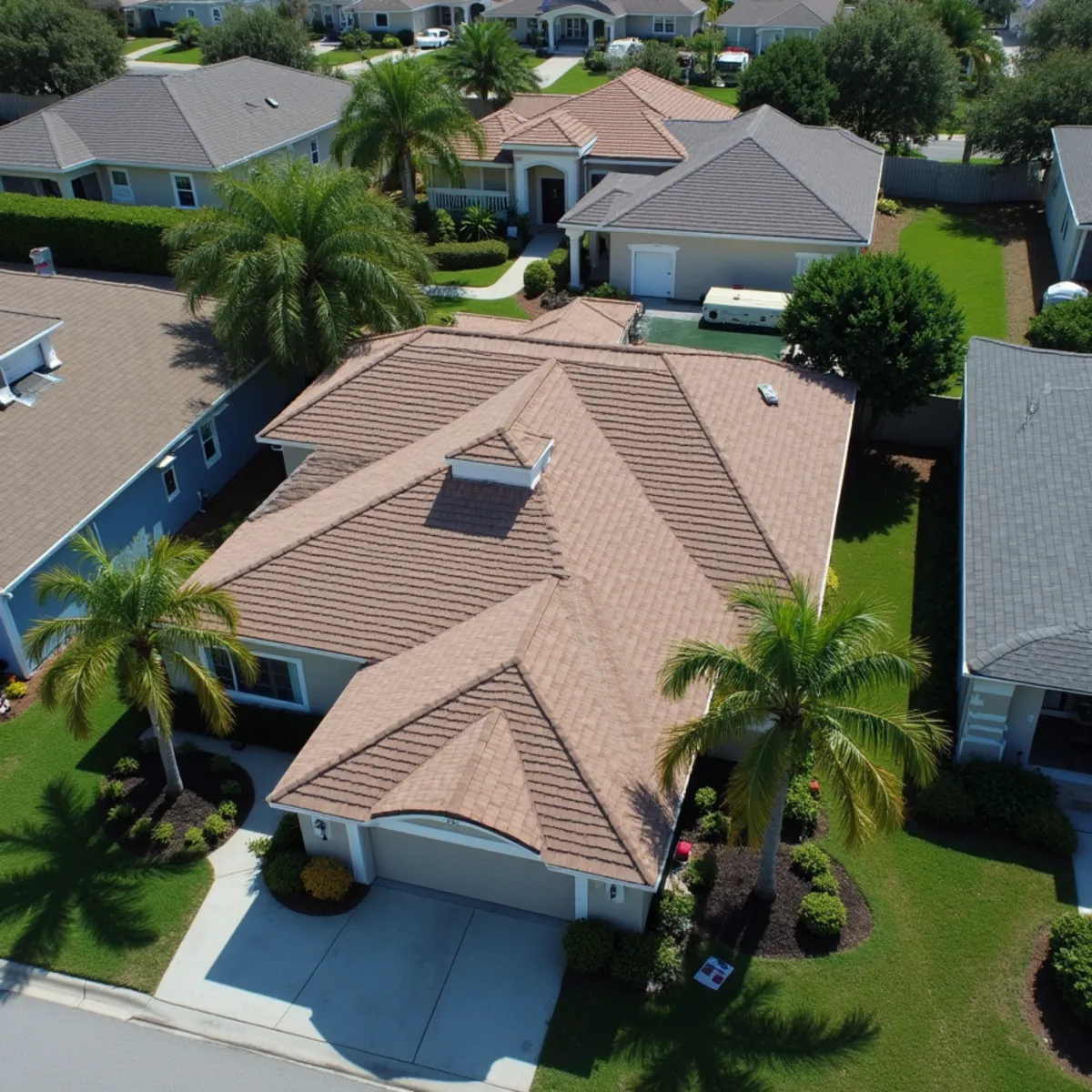
On the afternoon of October 9, 2024, hours before Hurricane Milton made official landfall on Florida's southwest coast, an unprecedented swarm of intense tornadic supercells erupted within the storm's outer convective rainbands. These violent low-topped supercells tracked rapidly across South Brevard County, devastating portions of Barefoot Bay, Micco, Grant-Valkaria, and South Palm Bay.
While catastrophic structural failures—such as ripped roof carports and overturned manufactured homes—dominated news headlines, hundreds of nearby site-built single-family residences sustained severe aerodynamic trauma that remains completely invisible from the street.
Tornadoes and localized downbursts generate extreme pressure differentials. As high-velocity cyclonic winds sweep over roof ridges and gable eaves, Bernoulli's principle creates massive atmospheric suction, exerting thousands of pounds of upward vertical lift on roof planes.
Outer Rainband Supercells Across Barefoot Bay, Micco, and South Palm Bay
Unlike conventional linear hurricane winds that blow from a sustained directional heading, tornadic supercells generate violent multi-directional micro-rotations. Roof systems designed to deflect unidirectional coastal winds suffered severe lateral twisting that stressed wood framing connections.
Aerodynamic Low-Pressure Vortices and Localized Uplift Shear
Localized vortex cores drop barometric pressure instantaneously. The sudden expansion of air trapped inside home attics exerts explosive upward pressure against the underside of plywood roof sheathing, popping fasteners and breaking adhesive seals without necessarily stripping shingles completely away.
2. The Danger of 'Unbonded' Shingle Thermal Sealant Strips
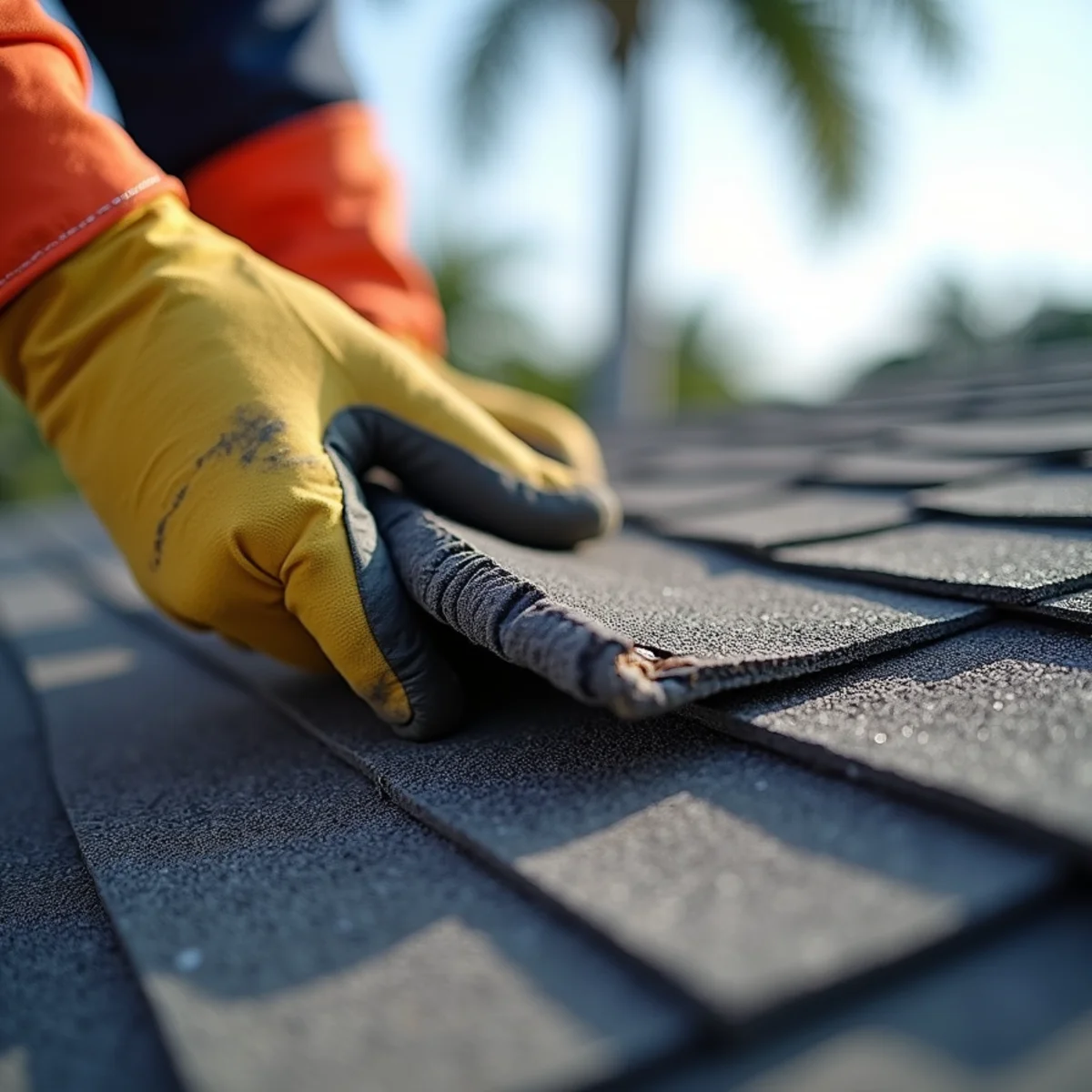
The most widespread and insidious form of wind damage following a severe storm event is the systemic failure of the shingle thermal sealant strip—a condition known in forensic engineering as 'unbonded shingles'.
The Mechanics of Shingle Delamination: Suction vs. Thermal Bonds
Modern architectural shingles rely on factory-applied heat-activated elastomeric asphalt adhesive strips to fuse each overlapping shingle tab into a continuous, wind-resistant monolithic blanket. When cyclonic uplift suction exceeds the adhesive tensile strength, the tabs separate. The shingles drop back down into place after the gust passes, appearing completely normal from ground level.
Creasing, Micro-Fractures, and Progressive Blow-Off Vulnerability
Once unbonded, individual tabs flap freely during ordinary afternoon sea breezes. Over successive weeks, wind bends the loose tabs upward, fracturing the fiberglass reinforcement matting across the top of the exposure line. These horizontal micro-creases destroy the shingle's water-shedding integrity, allowing rainwater to penetrate through nail penetrations.
Tactile Uplift Testing Protocols: Distinguishing Storm Shear from Aging
Certified roofing forensic inspectors utilize non-destructive tactile uplift testing. By gently testing individual shingle tabs with calibrated 45-degree finger pressure, inspectors verify whether the thermal adhesive has released cleanly. Storm-induced delamination leaves oxidized, dust-contaminated asphalt surfaces that cannot re-adhere, proving recent aerodynamic wind trauma.
3. Forensic Hail Detection: Differentiating Storm Impacts from Blisters
Severe convective storms in Central Florida frequently produce hail up to golf-ball size (1.75 inches in diameter). Distinguishing functional storm impact damage from benign manufacturer defects is critical for insurance carrier indemnification.
Hail Impact Bruises: Crushed Fiberglass Mats and Granule Displacement
When a high-velocity hailstone strikes an asphalt shingle, it exerts localized kinetic crushing force. Granules are driven into the asphalt substrate or knocked away, exposing black bitumen. More critically, the underlying woven fiberglass scrim suffers microscopic fracturing. A tactile thumb-press test reveals a distinct spongy soft spot ('bruise') indicating permanent structural compromise.
Thermal Blistering vs. Hail Strikes: The Forensic Spatter Test
Insurance company adjusters frequently attempt to dismiss hail damage as pre-existing 'thermal blistering'. Forensic inspectors resolve this by inspecting the fiberglass core. A popped manufacturing blister features hollow crater rims with asphalt bubbles, whereas a true hail impact displays crushed substrate fibers, micro-fractured glass scrims, and directional impact slumping.
Soft Metal Collateral Proof: Lead Pipe Boots, AC Fins, and Ridge Caps
Corroborating hail damage requires surveying 'soft metals' across the property. Hailstones leave unmistakable semi-circular dents and oxidized spatter marks on soft lead plumbing flashings, aluminum box vents, gutters, downspouts, and outdoor air-conditioning condenser cooling fins. Documenting matching dent diameters on soft metals provides indisputable scientific proof of a covered hail event.
4. Hidden Structural Trauma: Roof Trusses, Gusset Plates, and Sheathing
Violent tornado uplift and severe wind shear often inflict internal structural damage inside the attic envelope that remains invisible until ceiling drywall begins to crack or sag.
Attic Inspections: Displaced Truss Connector Plates and Sheathing Pull-Through
During an in-depth forensic inspection, technicians enter the attic to inspect engineered roof trusses. Severe uplift suction can pull toothed metal gusset plates out of wood chords by 1/8 to 1/4 inch, compromising truss load-bearing capacity. Similarly, plywood sheathing can pull partially through nail heads, creating vertical deflection gaps.
Fastener Withdrawal: Ring-Shank vs. Smooth-Shank Nail Performance
Older homes built prior to modern Florida Building Code revisions utilized 6d or 8d smooth-shank nails to secure roof decking. Under cyclonic tornado suction, smooth nails withdraw easily from truss chords. Upgrading to code-mandated 8d ring-shank nails during post-storm restoration increases fastener withdrawal resistance by more than 300%.
Cracked Exterior Stucco and Wall-to-Roof Connection Separation
Severe uplift places extreme tension on metal hurricane clips and straps connecting trusses to the concrete tie-beam. Torsional movement often telegraphs outward, causing horizontal hairline cracking in exterior stucco along the roofline soffit band.
5. Florida Statutory Claims Protocol Under F.S. s. 627.70132
Navigating property insurance claims following a named storm or tornado event in Florida requires strict adherence to statutory deadlines and documented meteorological evidence.
The Strict One-Year Notice Clock for Windstorm and Hail Losses
Under Florida Statute s. 627.70132, policyholders must formally notify their insurance company of a windstorm or hurricane loss within one year (365 days) from the date the storm made landfall or caused the damage. Supplemental claims must be filed within 18 months. Missing this statutory window permanently forfeits your right to insurance recovery.
NOAA NEXRAD Radar Verification and Meteorological Hail Swath Reports
Insurance carriers require empirical proof that severe weather occurred at your specific geographic coordinates. Professional roofing scopes incorporate National Weather Service (NWS) NEXRAD Level II Doppler radar data, showing rotational velocity signatures, tornadic debris signatures (TDS), and dual-polarization Maximum Estimated Size of Hail (MESH) swaths directly over your parcel.
Why Waiting for Active Interior Ceiling Leaks Forfeits Insurance Rights
Homeowners often wait until water drips through ceiling drywall before calling a roofer. However, modern multi-layer underlayments can hold back water for 6 to 12 months after shingles delaminate. By the time water appears inside, the statutory 1-year claim deadline may have passed, or the insurer will deny coverage citing long-term neglected seepage.
6. Repair Protocols and Code Mandates: Spot Repair vs. 25% FBC Replacement
Restoring storm-damaged roofs in Brevard County involves navigating Florida Building Code mandates to ensure structural safety and maintain full insurability.
Localized Tab Replacement Limitations and Shingle Brittleness Constraints
Attempting to slide replacement shingles beneath weathered shingles on roofs older than 10 years rarely succeeds. The manipulation required to nail new shingles breaks the brittle surrounding shingles, causing progressive damage. If a roof cannot pass a formal shingle pliability test, localized repairs are unfeasible.
The 25% Rule Trigger Under Florida Building Code Existing Building Section 706
Under Section 706.1.1 of the Florida Building Code (Existing Building), if more than 25% of a roof section is damaged or repaired within a 12-month period, the entire roof section must be replaced and brought into full compliance with current building codes, including secondary water resistance (SWR) and 8d ring-shank deck nailing.
Wind Mitigation Form OIR-B1-1802 Re-Certification After Storm Repairs
Following the completion of permitted storm repairs or full replacement, homeowners must secure a certified Wind Mitigation Inspection (Form OIR-B1-1802). Submitting this document to your insurance carrier verifies current hurricane code compliance and triggers significant policy premium discounts.
Related Services & Local Areas Mentioned
Have Questions About Your Palm Bay Roof?
Connect with an experienced Florida roofing specialist. Call (773) 207-0769 for 24/7 live dispatch.
Frequently Asked Questions on This Topic
Clear technical answers based on Florida Building Code and Brevard County field data.
Yes. The vast majority of wind damage involves unbonded thermal sealant strips and fractured fiberglass reinforcement mats. The shingle tabs separate and lift during peak gusts, then settle back down. From ground level the roof looks intact, but its wind and water resistance is severely compromised.
Not Urgent? Send a Request
Fill out this form for scheduled re-roofing estimates, non-active maintenance checks, or insurance consultations.