
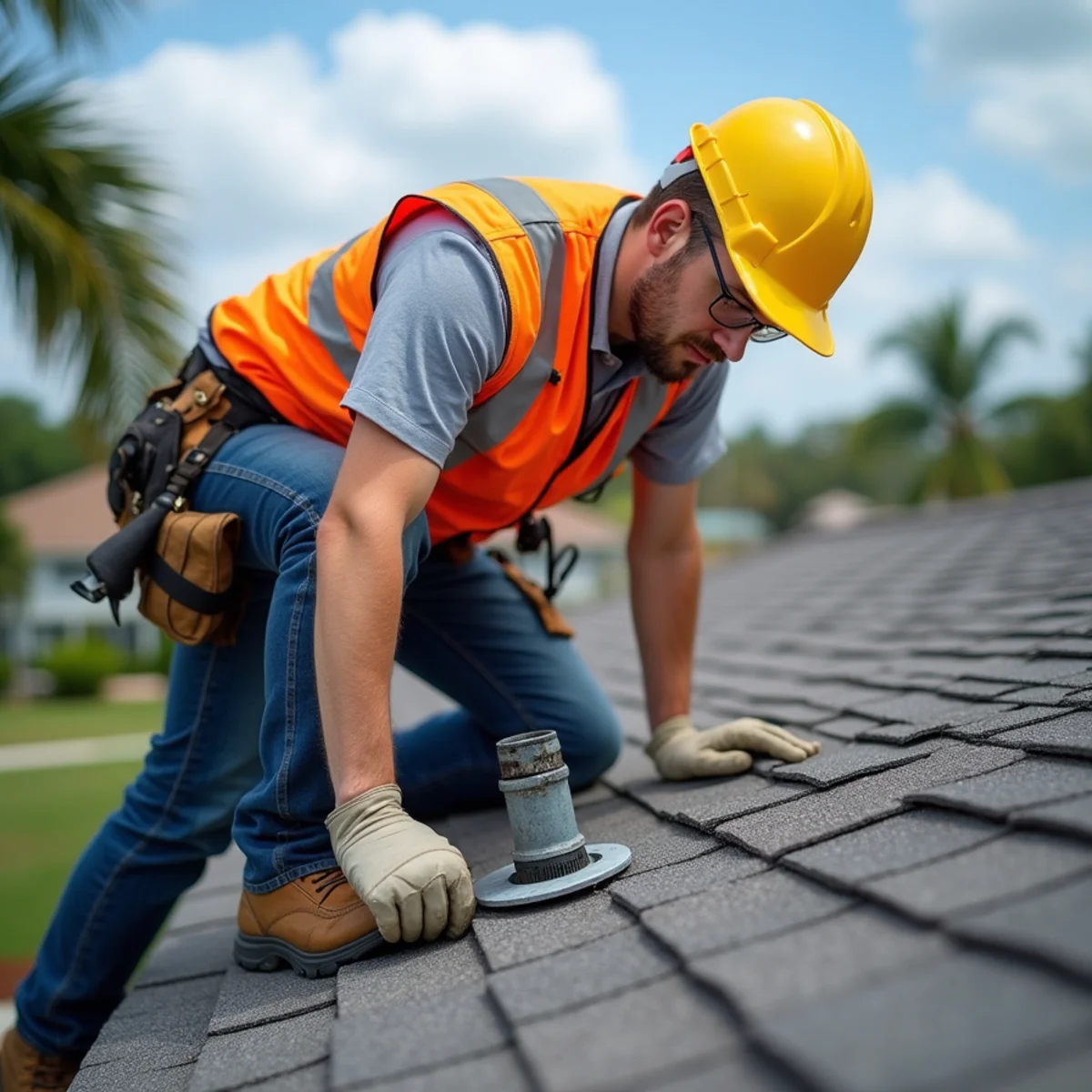
Active water intrusion can compromise drywall, saturate attic insulation, and rot decking within 24 to 48 hours. Our Florida-licensed network quickly identifies hidden moisture entry paths and seals roofs with durable, code-compliant methods.
In Palm Bay and across South Brevard County, roofing challenges are magnified by intense coastal elements. High humidity, intense tropical ultraviolet radiation, and Atlantic tropical squalls accelerate the wear on roof coverings, underlayment membranes, and flashings. Whether you live in an original 1980s General Development Corporation (GDC) home in Port Malabar or a newer subdivision in Bayside Lakes, our independent licensed contractor network delivers engineered solutions adhering strictly to the 2023 Florida Building Code (8th Edition).
Symptoms That Require Immediate Evaluation
Signs of a Roof Leak in a Palm Bay Home
Palm Bay's unique subtropical climate creates roofing challenges that differ significantly from northern or inland regions. Between torrential Atlantic summer downpours, sustained high humidity, and intense ultraviolet radiation, minor roof weaknesses rapidly degrade into active leaks. Many homeowners first notice a slight yellowish or brown stain blooming across their drywall ceiling in neighborhoods like Port Malabar or Bayside Lakes.
In other instances, water travels down electrical conduits, pooling inside recessed light fixtures or ceiling fans. If you notice moisture near switches or fixtures, immediately maintain distance and avoid flipping switches until the electrical circuit has been de-energized. Damp attic insulation, peeling drywall joint tape, or musty smells after a 30-minute afternoon thunderstorm are all early warning signs that exterior roof envelope components have failed.
Where Roofs Leak Most Frequently in Palm Bay
Water rarely penetrates the solid center of an undamaged asphalt shingle or metal panel. Instead, leaks concentrate around roof penetrations, structural junctions, and flashing transitions where dissimilar building materials meet. Our field inspections consistently uncover water intrusion at these specific vulnerability points:
1. Plumbing Vent Pipe Boots: The intense Florida sun bakes the flexible neoprene rubber collars on plumbing vent stacks. Within 6 to 10 years, these rubber gaskets dry out, crack, and split, allowing water to trickle directly down the vent pipe into bathroom ceilings.
2. Valley Intersections: Roof valleys handle torrential runoff from two intersecting roof planes. If the valley flashing is corroded, improperly nailed, or clogged with oak leaves and pine needles, water dams up and slips beneath the underlayment.
3. Wall & Step Flashing: Where an upper-story wall or second-story gable meets a lower roof slope, L-shaped step flashing must be layered shingle by shingle. Dried caulk or loosened counter-flashing allows wind-driven rain to infiltrate framing studs.
4. Ridge Vents & Off-Ridge Baffles: Attic exhaust vents are designed to let hot air escape while keeping precipitation out. Severe horizontal wind gusts can drive rain up and over older baffles, dampening the insulation along your attic ridge line.
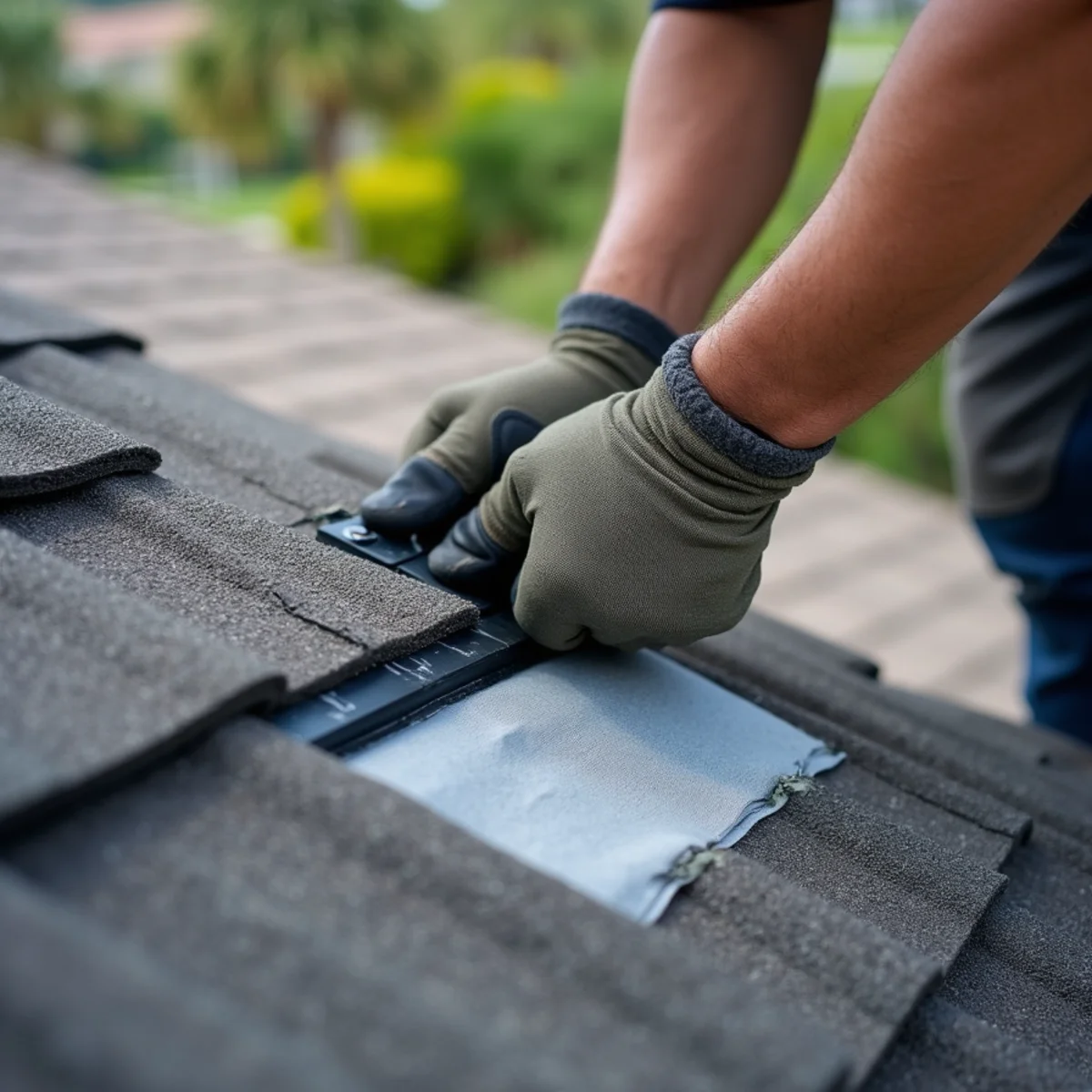
Precision pipe boot and valley flashing repair stops active ceiling water intrusion without full replacement.
Schedule Your Roof Leak Repair Inspection
Call now to connect with our Palm Bay dispatch desk. We provide written scopes, photo documentation, and Florida Building Code certified workmanship.
The Roof Leak Repair Inspection-to-Completion Process
1. Phone-First Intake & Rapid Dispatch
Call (773) 207-0769 for instant triage guidance. We determine water severity, potential electrical proximity, and dispatch an experienced local roofing crew.
2. Systematic Leak Tracing & Attic Walk
Water travels along rafters before manifesting indoors. Technicians inspect the attic interior, check moisture levels, and map the entry back to the exterior roof plane.
3. Exterior Component Inspection
We examine pipe boots, chimney cricket flashing, valleys, skylight seals, and ridge caps across your asphalt, tile, or metal covering.
4. Permanent Structural Repair or Tarping
If weather is severe, we install protective emergency coverings. Under dry conditions, we remove damaged layers, repair wet decking, and install fresh underlayment and matching materials.
5. Documentation & Workmanship Sign-off
You receive dated photos of the failure source, step-by-step repair documentation, and our comprehensive written workmanship assurance.
How a Professional Roofer Traces a Leak to Its Source
Because water flows downward along the path of least resistance—frequently traveling along roof rafters, horizontal collar ties, or electrical wire runs—the spot on your ceiling where water drips is rarely directly beneath the hole in the roof. Finding the true source requires a scientific, methodical approach.
Our certified roofing technicians begin in the attic with high-sensitivity thermal imaging cameras and digital moisture meters. By tracking moisture footprints across the plywood sheathing and insulation, the roofer traces the moisture trail upward to the precise penetration point. Afterward, a meticulous roof-walk inspection verifies shingle adhesion, nail pop locations, and flashing integrity. If necessary, a controlled low-pressure water test isolates individual joints until the entry path is verified beyond doubt.
Why Leaks Show Up in Palm Bay: Climate & Construction Factors
A significant portion of Palm Bay's residential architecture consists of General Development Corporation (GDC) homes constructed during the 1980s and 1990s. Many of these homes feature 7/16-inch or 1/2-inch roof decks fastened before modern Florida Building Code uplift requirements were implemented.
Decades of baking summer heat exceeding 140 degrees in unventilated attics causes organic asphalt compounds in shingles to volatilize, leaving shingles brittle and easily cracked by wind gusts. When an Atlantic tropical storm or squall line passes through Brevard County, wind pressures force sheets of rain horizontally beneath shingle edges. Without a fully adhered secondary water barrier, moisture quickly saturates the aged 15-pound felt paper and rots the underlying decking.
What to Do Right Now While You Wait for Dispatch
While our technician is en route to your Palm Bay property, your priority must be interior asset protection and safety. Never climb onto a wet roof or attempt to enter a dark attic during active rainfall. Follow these critical steps:
1. Contain the Dripping Water: Place a broad plastic bucket or plastic tote beneath the active drip. Place an old towel or rag at the bottom of the container to dampen the rhythmic sound of dripping water and prevent splashing onto nearby flooring.
2. Relieve Ceiling Pressure: If you see a prominent, sagging bulge in your ceiling drywall, water has pooled above the plaster. Place a large container underneath, and carefully pierce the center of the blister using a screwdriver or pencil. This allows trapped water to drain safely in a controlled stream rather than causing an explosive drywall collapse.
3. Move Valuables & Electronics: Clear electronics, furniture, rugs, and important documents from the room. Take clear, timestamped photographs of the water intrusion, damaged items, and surrounding areas for insurance records.
Repair the Leak or Replace the Roof? Evaluating Your Options
Not every leak requires a full roof replacement. When an isolated leak occurs on a roof with sound, pliable shingles that has several years of serviceable life remaining, a targeted repair is the sensible, economical solution. Technicians surgically remove the damaged section, replace any deteriorated plywood sheathing, install modern peel-and-stick underlayment, and weave new, color-matched shingles seamlessly into the existing field.
Conversely, if your roof is over 15 to 20 years old, displays widespread granule loss, curling tabs, widespread brittle shingles, or multiple failing valleys, individual repairs may become an expensive exercise in chasing leaks from room to room. In Florida, insurers also scrutinize roofs older than 15 years under Florida Statute s. 627.7011, often mandating an inspection demonstrating at least 5 years of remaining life to maintain coverage. We provide clear, objective facts so you can make an informed financial decision.
What Affects Roof Leak Repair Cost in Palm Bay?
Florida law and professional ethics prevent quoting fixed prices without inspecting roof conditions, decking integrity, and pitch. Below are real market planning ranges.
Published Planning Ranges
Live dispatch coordinators answering 24 hours a day, 7 days a week.
Providing Roof Leak Repair Across South Brevard
Our network provides full coverage for Roof Leak Repair in Palm Bay (including zip codes 32905, 32907, 32908, 32909) as well as our neighboring service areas:
Related Florida Roofing Guides & Articles
Roof Leaking During a Storm? What to Do Before the Roofer Arrives
If your roof is leaking during a storm, immediately cut power to wet rooms at the breaker panel, relieve ceiling water pressure by puncturing sagging drywall blisters over a bucket, protect flooring with tarps, and never climb onto a wet roof. Contact a 24/7 emergency roofer to install batten-secured tarps as soon as severe winds subside.
How Much Does Roof Repair Cost in Palm Bay, FL? (2026 Price Guide)
Residential roof repair costs in Palm Bay, FL typically range between $350 and $1,250 for common leak repairs such as pipe boots, valley flashings, and shingle tab fixes. Minor vent reseals start around $175, while complex structural repairs involving rotted roof decking or multi-story steep pitches can reach $1,800 to $2,500.
Repair or Replace? Deciding on a 20-Year-Old Shingle Roof in Brevard County
Deciding whether to repair or replace a shingle roof in Florida depends on age, brittleness, and damage scope: if your roof is under 12 years old with localized damage under 25% of the surface, repair it. If it exceeds 15–20 years, fails tab pliability tests, or faces insurance non-renewal, full replacement is financially superior.