
Roof Leaking During a Storm? What to Do Before the Roofer Arrives
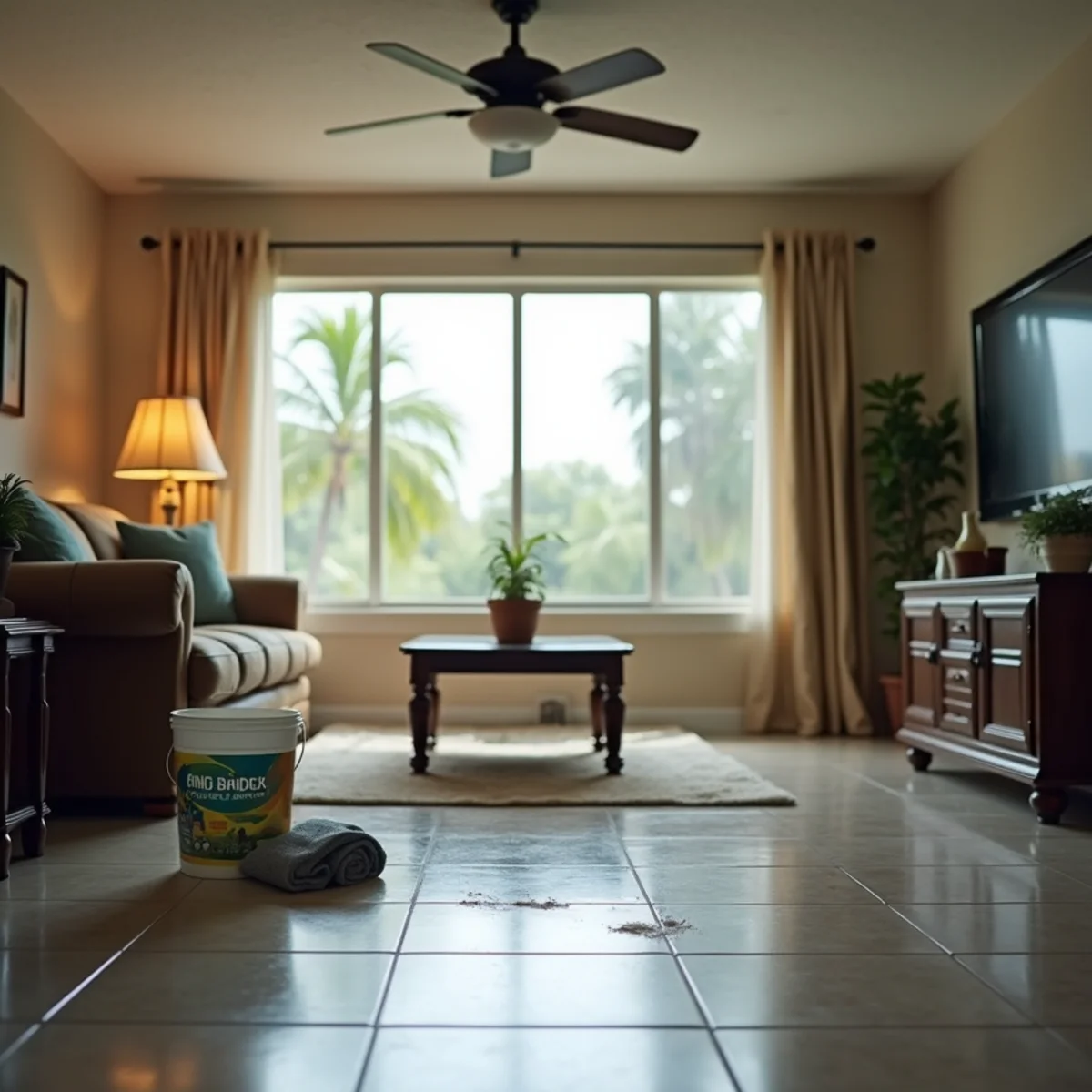
If your roof is leaking during a storm, immediately cut power to wet rooms at the breaker panel, relieve ceiling water pressure by puncturing sagging drywall blisters over a bucket, protect flooring with tarps, and never climb onto a wet roof. Contact a 24/7 emergency roofer to install batten-secured tarps as soon as severe winds subside.
1. The Critical First 15 Minutes: Personal Safety & Electrical Triage
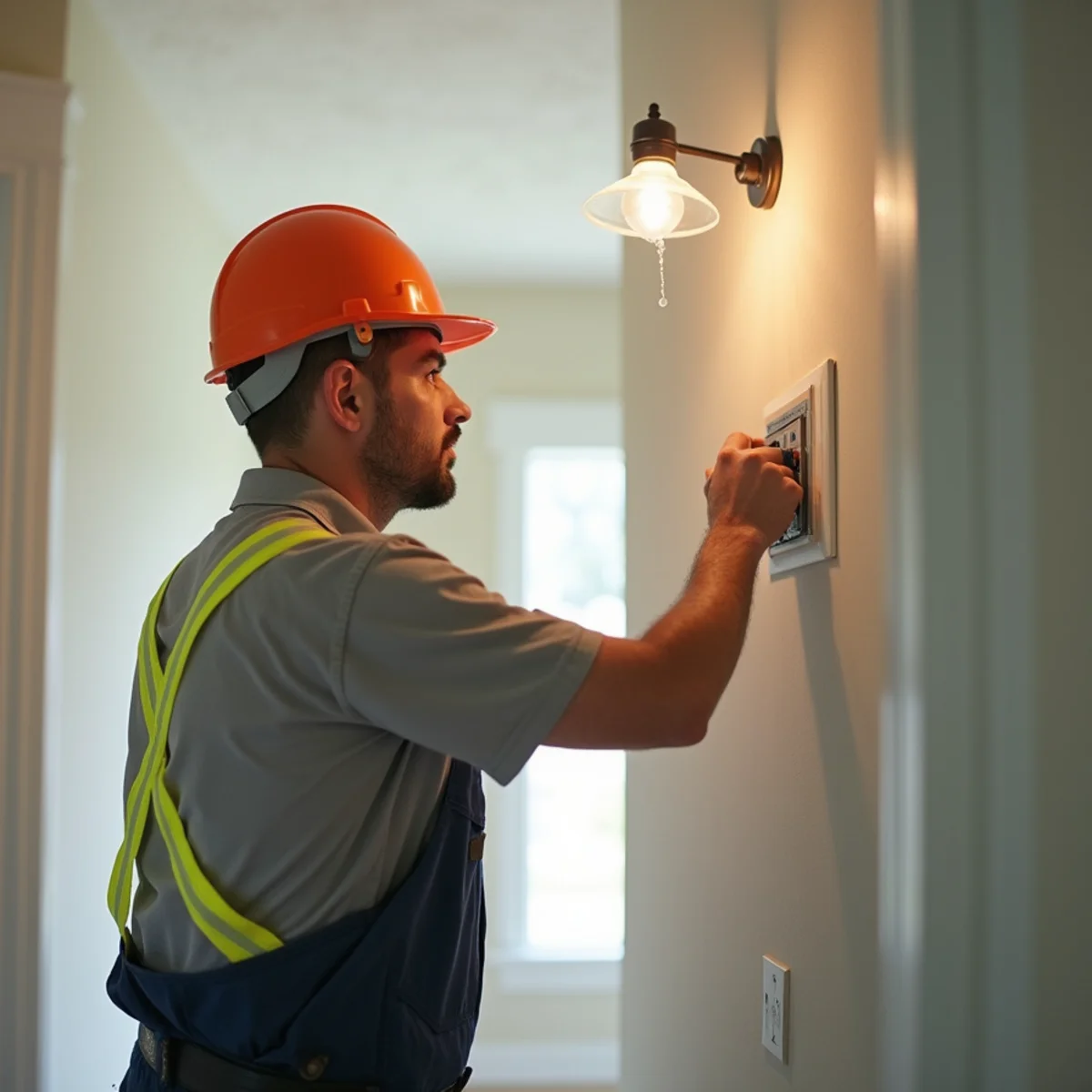
An active roof leak during a torrential Florida thunderstorm is stressful, but panicked decisions can lead to serious physical injury or house fires. The absolute first priority must be evaluating electrical danger. Water follows electrical wires, joists, and conduit runs inside your ceiling. If water is dripping directly through or adjacent to a recessed light can, ceiling fan, smoke detector, or wall switch, do not touch the light switch, lamp cords, or appliances.
Walk immediately to your main electrical service panel (typically located in your garage or exterior utility alcove) and switch off the specific circuit breaker controlling that room. If the floor around the breaker panel is wet, do not touch the panel—call Florida Power & Light (FPL) or an emergency electrician immediately. Never stand in standing water while operating electrical equipment.
De-Energizing Ceiling Circuits at the Main Breaker Panel
Locate the labeled circuit directory on the inside door of your load center. Trip the 15-amp or 20-amp single-pole breakers feeding ceiling lights and fan fixtures in the affected zone. If you are unsure which breaker isolates the water intrusion area, safely shut off the entire sub-panel or main disconnect rather than risking electrical arcing through wet ceiling joists.
Recognizing Hidden Fire Hazards in Damp Junction Boxes
Even after tripping the breaker, moisture trapped inside metal junction boxes can corrode copper wire splices and degrade wire nuts. Keep a battery-powered LED flashlight on hand, avoid turning switches back on until the cavity has been inspected by an electrician or roofing technician, and never plug extension cords into floor outlets near water intrusion zones.
2. Relieving Ceiling Water Weight to Prevent Catastrophic Drywall Collapse
When driving rain penetrates your roof deck underlayment, it quickly pools on the top side of your ceiling drywall, soaking through the blown fiberglass or cellulose attic insulation. A single gallon of water weighs approximately 8.34 pounds. A ceiling drywall bay holding just 15 to 20 gallons of water is bearing over 150 pounds of dead weight that standard 1/2-inch gypsum board screws cannot sustain.
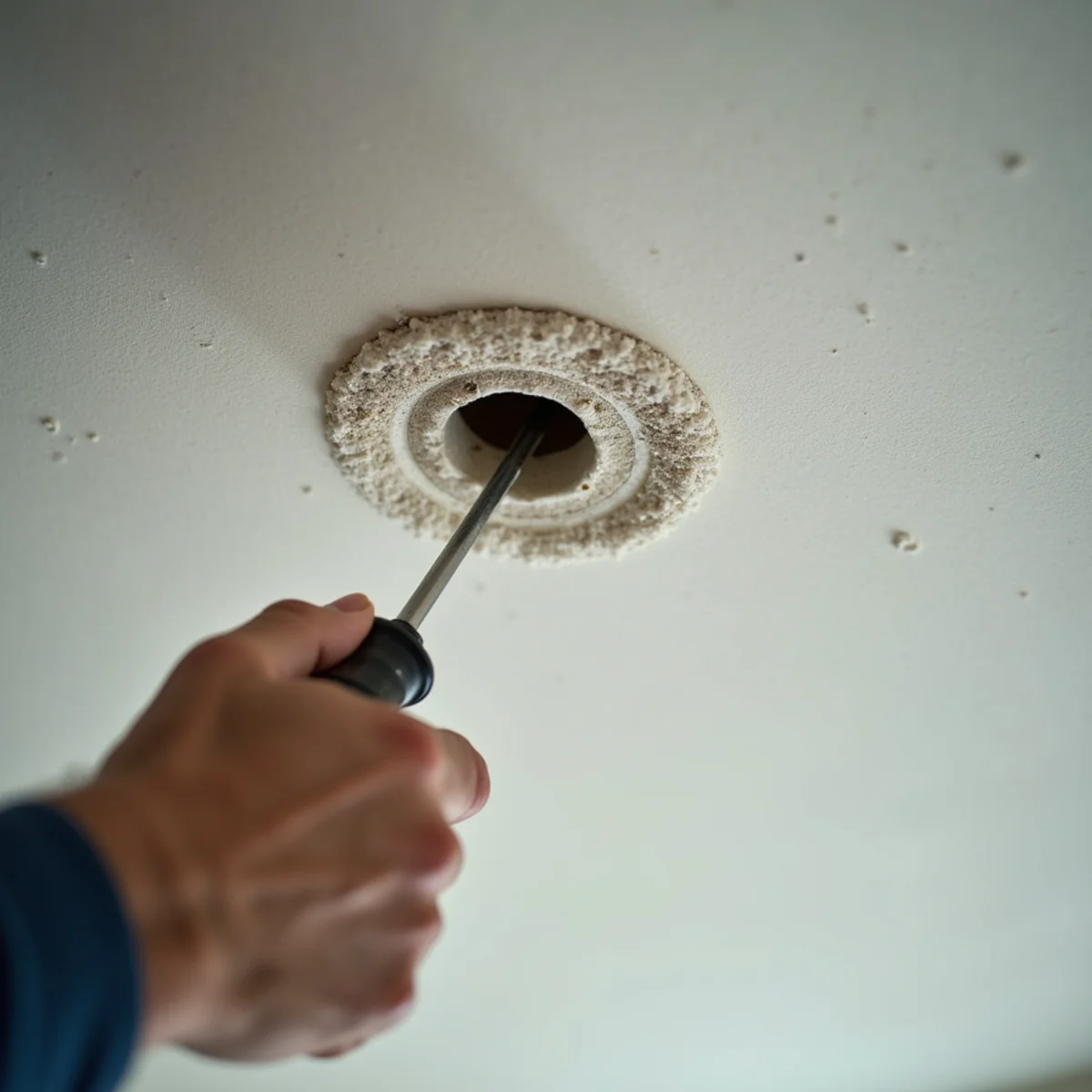
If you observe a sagging blister, yellow-brown circular water ring, or bowing drywall joint, place a broad 5-gallon bucket or plastic storage tote on the floor directly beneath it. Take a screwdriver, long nail, or pencil, stand safely to the side (never directly underneath), and poke a single drainage hole in the lowest center point of the blister. This allows trapped water to drain safely in a controlled stream rather than causing an explosive ceiling collapse that could crush furniture, ruin floors, and spread contaminated insulation.
The Controlled Screwdriver Puncture Technique
Puncturing the drywall from below releases hydrostatic pressure before gypsum dissolves into mush. Create a clean 1/4-inch puncture hole right in the apex of the sag. If water flows rapidly, leave the hole alone; do not rip the drywall open wider while water is actively draining, as the structural gypsum needs to retain its edge tension until the storm clears.
Managing Saturated Attic Insulation Above the Ceiling
Florida attics typically hold R-30 to R-38 blown fiberglass or cellulose insulation. Once saturated, insulation compresses, permanently loses its thermal resistance (R-value), and traps moisture against timber roof trusses for weeks. Draining the blister relieves immediate weight, but the wet insulation must be removed and replaced during professional interior remediation to avoid wood rot.
3. Containing Water Spread and Protecting Interior Furnishings
Once the drainage point is controlled, line the bottom of your catch bucket with an old bath towel or washcloth. This simple trade trick dampens the loud, rhythmic echoing of dripping water that causes elevated anxiety during nighttime storms, and prevents water droplets from splashing over the bucket rim onto hardwood or laminate floors.
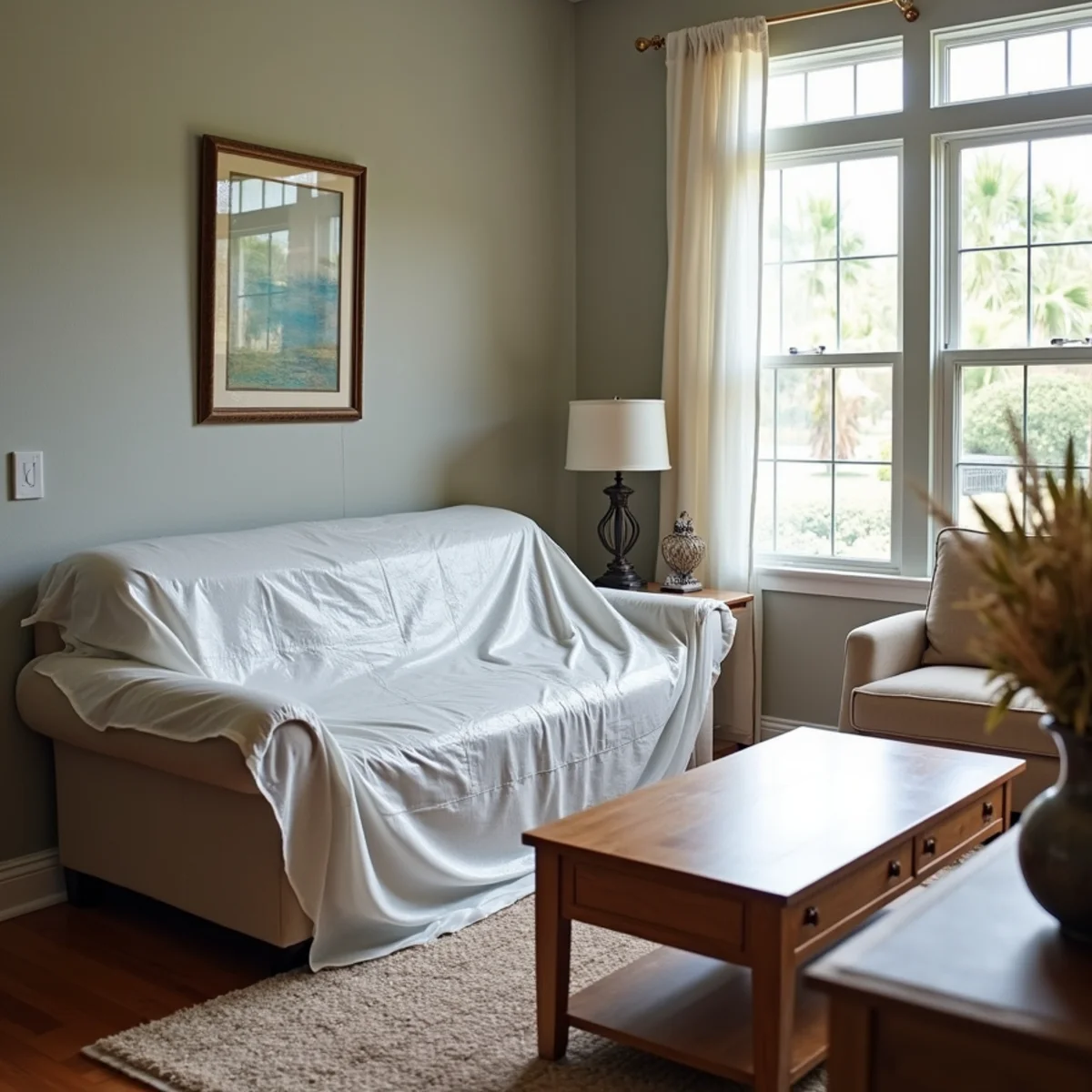
Clear all furniture, rugs, electronics, and cardboard boxes out of the room. If large furniture items cannot be relocated, elevate their legs by placing aluminum foil or inverted plastic cups beneath wooden legs to prevent wet carpet from leaching water stains into the wood. Drape heavy 4-mil contractor plastic sheeting or clean tarps over large sofas, dining tables, and entertainment centers.
Hardwood and Vinyl Plank Flooring Protection
Engineered wood and luxury vinyl plank (LVP) flooring are vulnerable to subfloor moisture trapped beneath the vapor barrier. Lay dry cotton beach towels along baseboard edges to absorb pooling runoff before water migrates beneath base molding into adjacent bedrooms.
Setting Up Continuous Water Containment Containers
If the leak rate is heavy (filling a gallon container every 30 minutes), set up a dual-bucket swap rotation or use a large 18-gallon plastic storage bin. For severe leaks when you must leave the home or sleep, attach a garden hose to a funnel positioned beneath the ceiling puncture, running the hose end into an adjacent shower stall or deep sink.
4. Why You Must Never Climb Onto a Storm-Soaked Roof
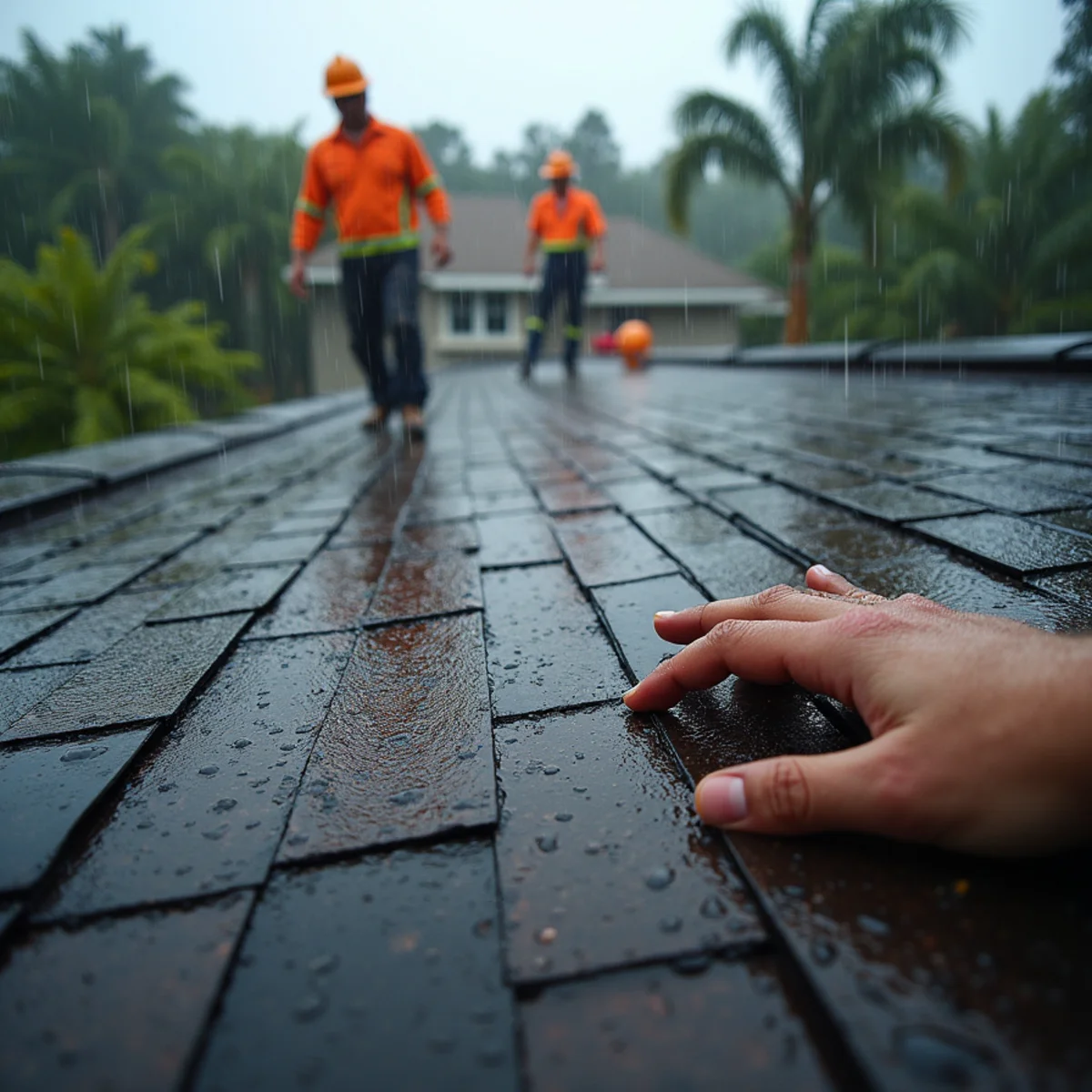
Every tropical storm and hurricane season in Brevard County, hospital emergency rooms treat homeowners who attempted to climb onto their roofs with a tarp during an active squall. Asphalt shingles coated in wind-driven rain and algae are as slippery as wet ice. Convective thunderstorm wind gusts exceeding 40 to 50 mph can easily blow an unharnessed person off a ladder.
Furthermore, waterlogged roof sheathing may have lost structural integrity. What appears to be solid roofing could be spongy, delaminated plywood ready to collapse under foot pressure. Stay inside, protect your interior, and contact an emergency roofing professional equipped with OSHA-compliant safety harnesses, roof anchor brackets, and specialized staging gear.
Wind-Driven Wet Shingle Friction Loss
Florida's high humidity fosters microscopic gloeocapsa magma algae on roof surfaces. When dry, architectural granules offer moderate traction; when saturated with rainwater, the algae forms a slick slime layer with near-zero friction. Footwear cannot grip a wet 4:12 or 6:12 slope under these conditions.
Concealed Sheathing Soft Spots and Delamination
Long-term slow leaks often rot out 1/2-inch CDX plywood or OSB roof decking long before visible water penetrates the ceiling drywall. Stepping onto a saturated roof deck during a storm carries a severe risk of punching straight through the sheathing into the attic rafters.
5. Documenting the Intrusion for Florida Insurance Claims

Before you wipe away standing water or begin drying out the room, pull out your smartphone and take extensive, date-stamped photos and videos. Capture wide shots showing the full room layout and tight close-ups showing the entry point, water dripping into containers, bubbling baseboards, and waterlogged drywall.
Photograph damaged personal property, including electronics, books, rugs, and furniture. Save receipts for any emergency supplies you purchase, such as plastic totes, fans, dehumidifiers, or tarps. In Florida, your homeowner's insurance policy requires you to take reasonable steps to mitigate secondary loss, and these receipts are reimbursable mitigation expenses under standard Coverage A and Coverage C policy provisions.
Capturing Date-Stamped Photographic and Video Evidence
Record a continuous video walk-through narrating the date, time, weather conditions, and visible drip rate. Pan from the floor accumulation up to the ceiling puncture. If possible, photograph the exterior of the house from ground level to document wind direction, fallen tree limbs, or visibly displaced shingles.
Understanding Florida Senate Bill 2-A Proof Standards
Under Florida property insurance reforms (SB 2-A), policyholders have a shortened window of one year to file storm damage claims. Insurers require clear contemporaneous evidence proving that interior water damage resulted from a storm-created opening rather than long-term neglect or deferred maintenance.
6. Expert Post-Storm Forensic Inspection: What Happens Once Rain Clears
The moment high winds drop below 35 mph and driving rain subsides, a licensed Florida roofing crew can safely access the roof exterior and attic space. Finding the true source of a leak requires forensic detective work because water rarely travels straight down; it frequently enters at an uphill flashing or ridge cap, runs 15 feet down a sloping rafter, and drips through drywall on the opposite side of the home.
A comprehensive post-storm inspection evaluates pipe boot rubber gaskets, step flashings along sidewalls, chimney saddles, roof valley transitions, and wind-creased shingle tabs that have lifted and broken their thermal asphalt sealant bond.
Attic Moisture Mapping and Thermal Imaging
Roofing technicians utilize calibrated infrared moisture meters and thermal imaging cameras inside the attic cavity. Wet timber and saturated fiberglass exhibit distinct evaporative cooling signatures, enabling inspectors to track hidden water trails back to the precise exterior breach without tearing down dry plaster or drywall.
Differentiating Valley Flashing Failures from Pipe Boot Deterioration
In Palm Bay homes built between 1985 and 2005, neoprene pipe boot collars dry-rot under intense UV exposure after 7 to 10 years, allowing water to track directly down plumbing vent pipes into bathrooms and kitchens. Conversely, valley leaks indicate failed underlayment or debris damming that requires re-weaving shingle courses.
7. Professional Emergency Tarping: Sandbag Ballast vs. Screw-Down Wood Battens
Emergency roof tarping is the critical bridge between active storm intrusion and permanent roof repair. However, how the tarp is secured determines whether it survives the next convective thunderstorm.
Amateur roofers or fly-by-night operators often weigh tarps down with loose sandbags, bricks, or tires. In Brevard County's 110-150 mph design wind zone, sandbags act as destructive airborne missiles and allow wind to catch the tarp edge like a sail, ripping it away within hours. Legitimate licensed roofing contractors secure woven polyethylene tarps using 1x2 or 2x4 kiln-dried wood furring strips mechanically fastened through the tarp into structural roof rafters, wrapping the top edge over the roof ridge to shed all oncoming water.
The Mechanical Batten-Fastening Standard
Wood battens are screwed down with weather-resistant wood screws every 12 to 16 inches along the perimeter and seams. This continuous mechanical clamping distributes wind uplift evenly, preventing shingle tears and ensuring the waterproof barrier remains air-tight through subsequent rainbands.
Transitioning from Emergency Tarp to Permanent Code-Compliant Repair
A properly installed emergency batten tarp can protect a home for up to 90 days while insurance adjusters inspect the property and city building permits are issued. Once permits are approved, the roofer removes the tarp and executes a permanent, Florida Building Code-compliant shingle or metal replacement.
Related Services & Local Areas Mentioned
Have Questions About Your Palm Bay Roof?
Connect with an experienced Florida roofing specialist. Call (773) 207-0769 for 24/7 live dispatch.
Frequently Asked Questions on This Topic
Clear technical answers based on Florida Building Code and Brevard County field data.
Roofers cannot walk on steep slopes during active lightning or gale-force winds due to fatal safety hazards. However, crews stage locally and mount the roof to install heavy-duty tarps the moment torrential downpours subside.
Not Urgent? Send a Request
Fill out this form for scheduled re-roofing estimates, non-active maintenance checks, or insurance consultations.