
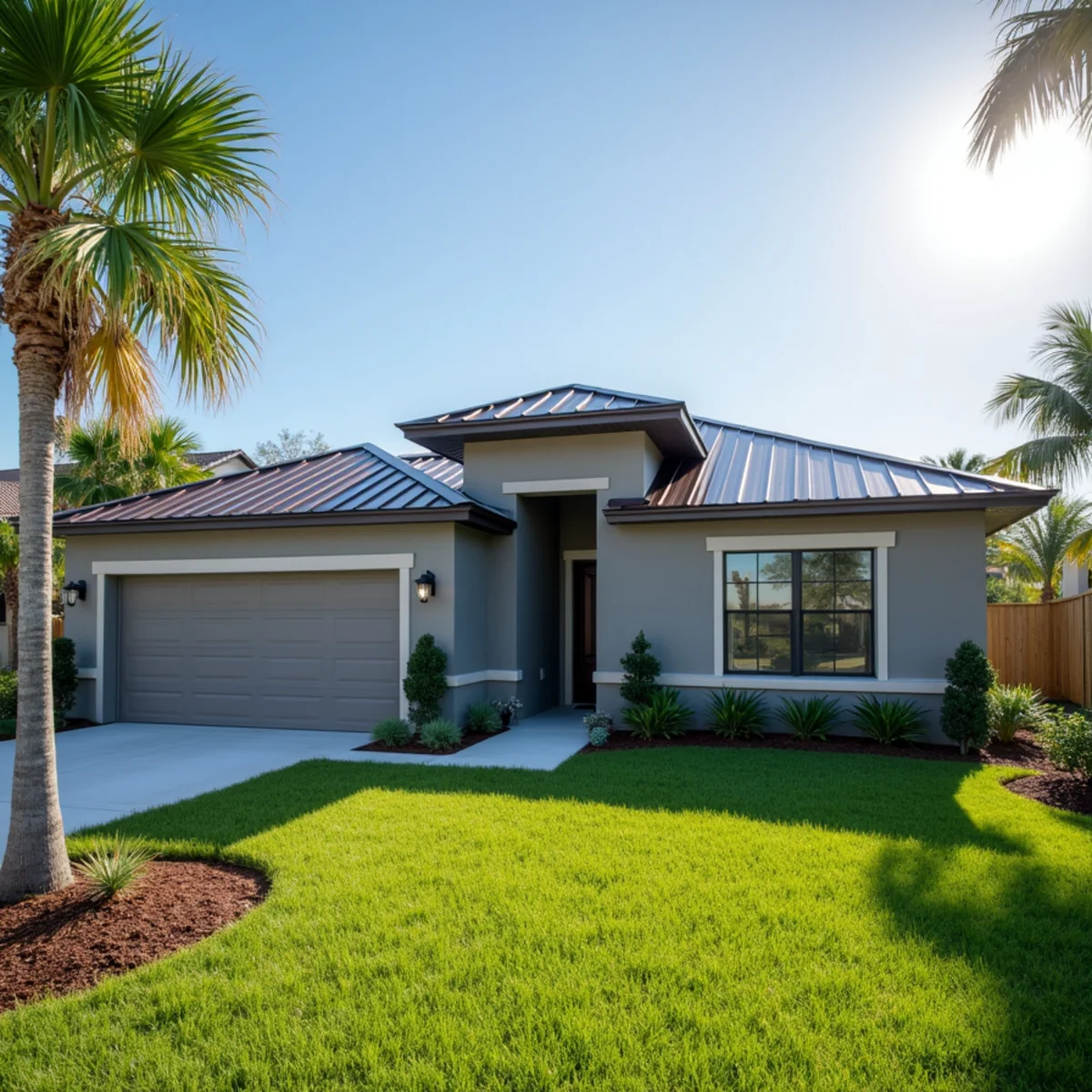
Metal roofing is the ultimate hurricane-resistant, energy-efficient roofing choice for Central Florida. We install premium standing seam systems, maintain classic 5V crimp panels, and repair backed-out fasteners and flashing on existing metal roofs.
In Palm Bay and across South Brevard County, roofing challenges are magnified by intense coastal elements. High humidity, intense tropical ultraviolet radiation, and Atlantic tropical squalls accelerate the wear on roof coverings, underlayment membranes, and flashings. Whether you live in an original 1980s General Development Corporation (GDC) home in Port Malabar or a newer subdivision in Bayside Lakes, our independent licensed contractor network delivers engineered solutions adhering strictly to the 2023 Florida Building Code (8th Edition).
Symptoms That Require Immediate Evaluation
Why Palm Bay Homeowners Switch from Shingles to Metal
Over the past five years, residential metal roofing has skyrocketed in popularity throughout Palm Bay, Melbourne, and Indian River County. The primary drivers are weather resilience and insurance tranquility. With hurricane wind speeds and convective thunderstorm gusts regularly testing coastal structures, homeowners are seeking permanent, worry-free roofing solutions.
Metal roofs reflect up to 70% of solar radiant energy, dramatically reducing heat absorption into the attic. In Palm Bay's long summer months where electric air conditioning bills soar, a cool metal roof can reduce household cooling costs by 15% to 25%. Coupled with 50+ year lifespans, metal roofing provides exceptional long-term return on investment.
Standing Seam vs. Exposed-Fastener Panels (5V Crimp and Ribbed)
When exploring metal roofing, homeowners generally choose between two primary engineering profiles:
1. Architectural Standing Seam: The premier standard. Standing seam panels feature interlocking vertical ribs that conceal the fasteners beneath the seams. Because fasteners are protected from sun, rain, and thermal movement, there are no exposed screw holes to develop leaks over time.
2. Exposed-Fastener Panels (5V Crimp & Tuff-Rib): The traditional Florida farmhouse aesthetic. Panels are fastened with screws driven directly through the metal face using neoprene rubber washers. While more budget-friendly upfront, the rubber washers inevitably dry out and degrade under Florida UV radiation, requiring full fastener replacement every 10 to 12 years.
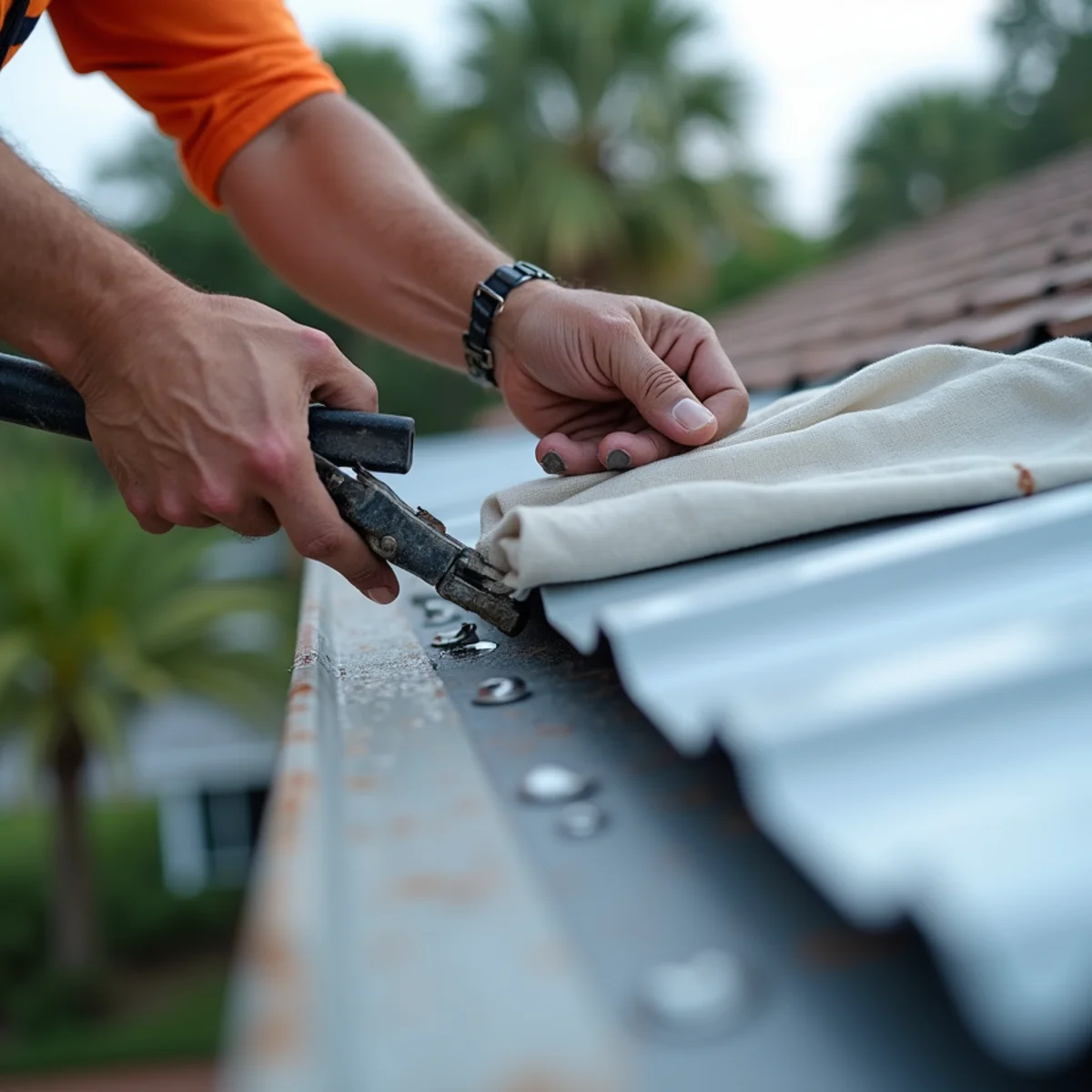
Concealed fastener standing seam profiles offer superior resistance to Atlantic coastal winds up to 160 MPH.
Schedule Your Metal Roofing Inspection
Call now to connect with our Palm Bay dispatch desk. We provide written scopes, photo documentation, and Florida Building Code certified workmanship.
The Metal Roofing Inspection-to-Completion Process
1. Engineering & Structural Assessment
We calculate wind uplift loads, evaluate roof deck fastening, and verify that your rafters can support the custom panel layout.
2. Profile Selection & Custom Panel Roll-Forming
Choose between sleek architectural standing seam with concealed fasteners or classic 5V crimp panels in Galvalume or Kynar 500 finishes.
3. High-Temperature Underlayment Installation
Because metal conducts solar heat, we install specialized high-temp self-adhering underlayment rated to 250°F to ensure dual-layer protection.
4. Precision Installation & Flashing Bending
Panels are secured with engineered clips and custom-fabricated metal flashings for valleys, gables, sidewalls, and vented ridge caps.
5. Final Code Sign-Off & Wind Mitigation Certification
Municipal inspections are performed, and we provide formal documentation unlocking maximum homeowner insurance discounts.
Wind Ratings and Florida Product Approval
Every metal roofing system installed in Palm Bay must possess a valid Florida Product Approval (FL#) certified for our specific wind zone. In Brevard County, wind design speeds range from 130 mph to 150 mph depending on coastal proximity.
Our contractors utilize heavy 24-gauge or 26-gauge Galvalume steel (a specialized zinc-aluminum alloy) or coastal-grade aluminum panels engineered with tight clip spacing. This ensures the roof system withstands Category 4 and 5 hurricane uplift pressures without peeling back or blowing off.
Metal Roof Repairs: Backed-Out Screws and Flashing Leaks
If your home already has a metal roof that is leaking, you rarely need a complete replacement. Metal expands and contracts significantly as temperatures shift from cool night lows to 140-degree daytime roof temperatures. This constant thermal movement can slowly back out screws and loosen perimeter flashing.
Our metal roof repair technicians replace degraded screws with oversized #14 commercial fasteners featuring UV-resistant EPDM washers. We re-flash leaky plumbing boots with flexible silicone boots, reseal oxidized valley joints, and install custom bent gable trim to restore permanent watertight integrity.
What Affects Metal Roofing Cost in Palm Bay?
Florida law and professional ethics prevent quoting fixed prices without inspecting roof conditions, decking integrity, and pitch. Below are real market planning ranges.
Published Planning Ranges
Live dispatch coordinators answering 24 hours a day, 7 days a week.
Providing Metal Roofing Across South Brevard
Our network provides full coverage for Metal Roofing in Palm Bay (including zip codes 32905, 32907, 32908, 32909) as well as our neighboring service areas:
Related Florida Roofing Guides & Articles
Metal Roof vs Shingles in Brevard County: Wind, Heat, Insurance and Lifespan
In Brevard County, standing seam metal roofs cost more upfront ($19,500–$30,000 vs $10,500–$16,800 for architectural shingles), but deliver a 50+ year lifespan, 160+ mph Category 5 wind ratings, 15–25% electric cooling bill savings, and immunity from Florida's 15-year insurance cancellation rule, making metal the superior long-term financial investment.
The Complete Guide to Wind Mitigation Inspections in Palm Bay, FL
A wind mitigation inspection in Brevard County evaluates seven structural roof features using Florida Form OIR-B1-1802: roof covering age, deck attachment nail patterns, roof-to-wall hurricane clips, roof geometry (hip vs gable), and secondary water resistance (SWR), unlocking annual insurance premium savings of $500 to $2,000+ for local homeowners.
Florida's 15-Year Roof Rule: What to Do When Your Insurer Flags Your Roof
Under Florida's 15-year roof rule (Florida Statute s. 627.7011), property insurance companies cannot refuse to issue or renew a homeowners policy solely based on roof age if an asphalt roof is under 15 years old. For roofs 15 years or older, insurers must permit an authorized roof inspection certifying at least 5 years of remaining useful life.