
Repair or Replace? Deciding on a 20-Year-Old Shingle Roof in Brevard County
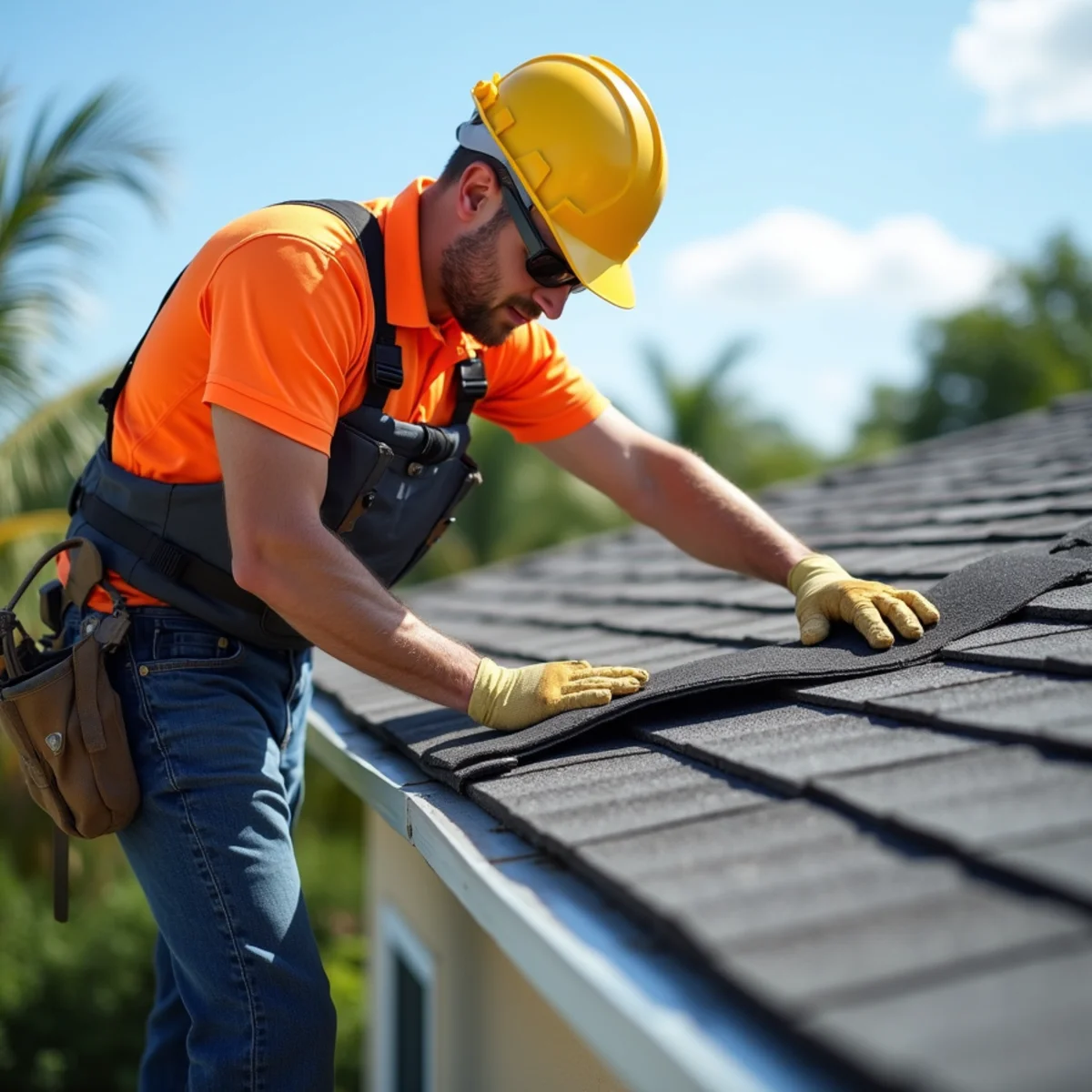
Deciding whether to repair or replace a shingle roof in Florida depends on age, brittleness, and damage scope: if your roof is under 12 years old with localized damage under 25% of the surface, repair it. If it exceeds 15–20 years, fails tab pliability tests, or faces insurance non-renewal, full replacement is financially superior.
1. The 20-Year Milestone: Florida Subtropical Climate vs. Asphalt Shingle Chemistry
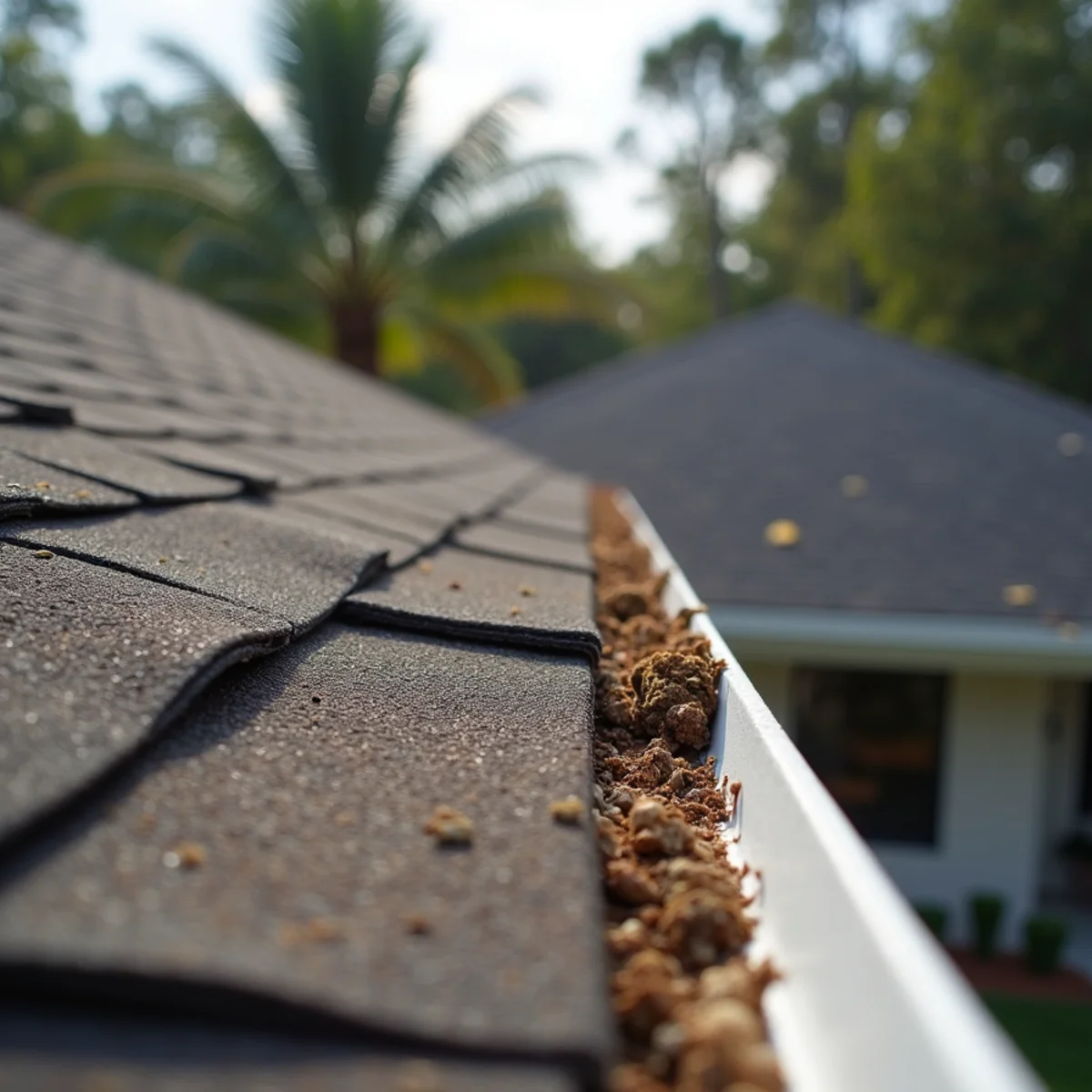
In northern states with temperate climates and short summers, high-grade architectural shingles frequently achieve 25 to 30 years of serviceable life without catastrophic failure. In Brevard County, Florida, however, roofs endure a brutal and relentless environmental assault: daily ultraviolet radiation that volatilizes asphalt oils, attic cavity temperatures consistently exceeding 140°F, torrential convective thunderstorms, and sudden tropical squalls.
By year 18 to 20, the vast majority of asphalt shingles in Palm Bay, Melbourne, and West Melbourne have reached the end of their functional flexibility. While the roof may appear reasonably intact from your front driveway, the underlying asphalt matrix and waterproofing layers have degraded significantly.
How Extreme Thermal Cycles Accelerate Asphalt Volatilization
Florida's intense solar radiation bakes asphalt shingles, driving out volatile plasticizing oils that keep the material supple. Over two decades, this continuous thermal baking causes the asphalt to oxidize, harden, and micro-fissure, allowing moisture to penetrate the fiberglass reinforcement mat.
The Role of High Humidity and Algae in Shingle Degradation
Continuous humidity fosters gloeocapsa magma algae growth, visible as dark black streaks on north-facing roof slopes. Algae feeds on the calcium carbonate limestone filler within shingles, slowly thinning the protective coating and accelerating granule shedding during heavy downpours.
2. The Shingle 'Pliability Test' and Physical Diagnostic Benchmarks
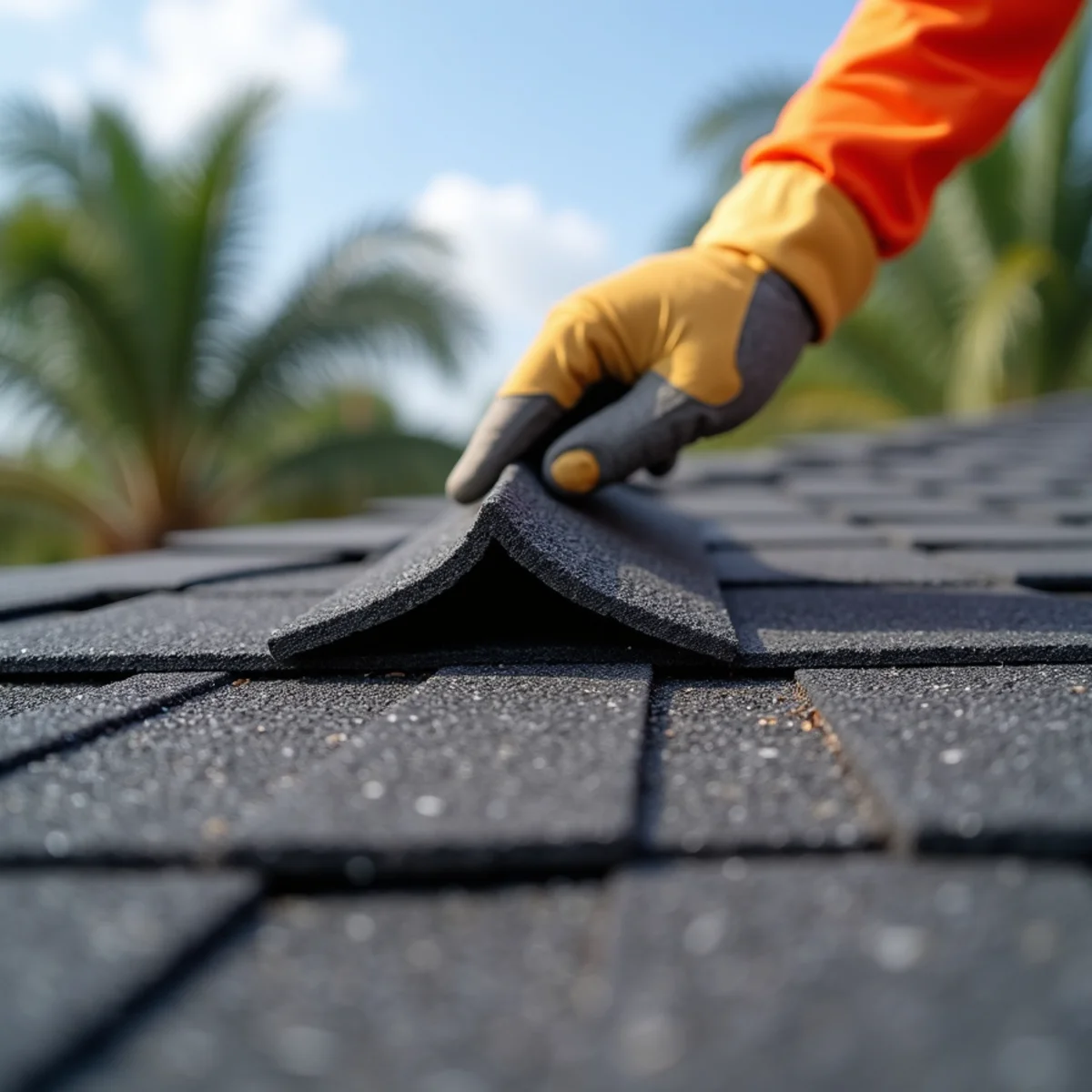
When a certified roofing technician evaluates an aging roof, they do not rely on guesswork or superficial visual scans; they perform mechanical field tests to measure remaining material elasticity.
The most fundamental diagnostic benchmark is the shingle tab pliability test. To repair an isolated leak—such as replacing a rotted pipe boot or fixing wind-lifted shingles—a roofer must gently lift the overlapping shingles in the courses above to pull old fasteners and slide in fresh underlayment and new shingles.
The Mechanical Hinge-Line Flexibility Test
On a roof under 10 years old, shingles flex upwards 45 to 60 degrees without deformation. On a 20-year-old Florida roof, the asphalt has turned glass-brittle; lifting a shingle even 15 degrees snaps the tab clean across the top sealant line. If attempting to replace three damaged shingles cracks six adjacent tabs, executing a clean localized repair is physically impossible.
Granule Depletion and Exposed Fiberglass Scrim Risks
Ceramic granules protect the asphalt from UV degradation. When granules wash into gutters, bald patches expose the black asphalt and shiny fiberglass threads beneath. Exposed fiberglass scrim degrades rapidly in direct sunlight, failing within 60 to 90 days of initial exposure.
3. Florida's 25% Building Code Threshold (FBC Existing Building Chapter 7)
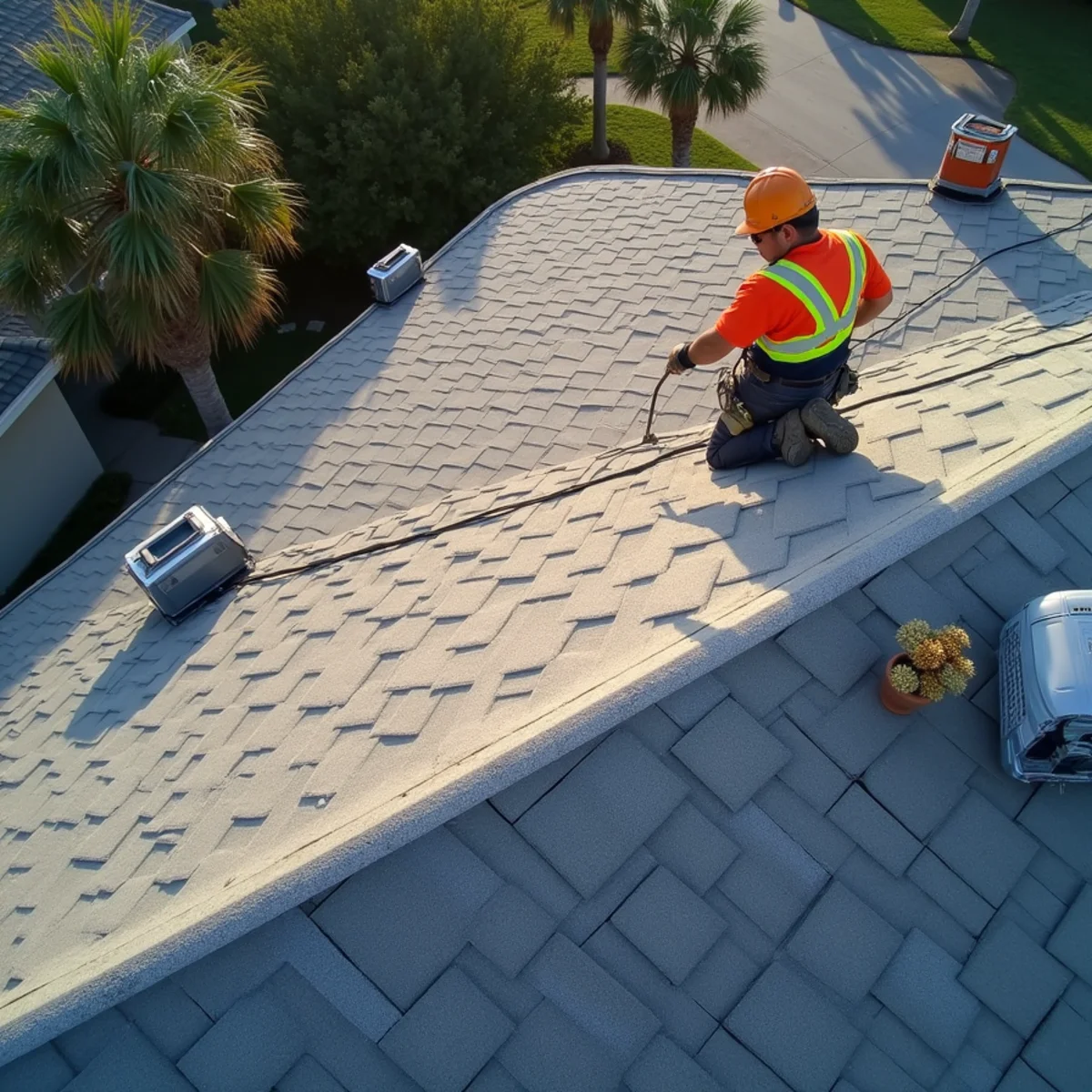
Under the Florida Building Code (8th Edition 2023) Existing Building provisions, strict legal thresholds govern the boundary between allowable repairs and mandatory total roof replacement.
Section 706.1.1 dictates that if more than 25% of the total roof surface area or roof section is repaired, replaced, or recovered within any 12-month period, the entire roofing system must be brought into full compliance with current building code—which mandates full tear-off and replacement.
Understanding the Cumulative 12-Month Roof Area Calculation
Homeowners often believe they can circumvent replacement by repairing 15% of the roof in January and another 15% in July. The Florida Building Code specifically tracks work cumulatively over a 12-month period. Once permitted work exceeds one-quarter of the total square footage, building officials cannot issue final inspection sign-off without whole-roof replacement.
When Piecemeal Slope Patches Legally Force Full Replacement
On multi-faceted hip roofs common in Port Malabar and Bayside Lakes, wind damage often scatters across three or four separate slopes. Even if individual patches are modest, their combined area frequently surpasses the 25% statutory cap.
4. The True Financial Equation: Total Cost of Ownership Comparison

Homeowners frequently balk at the initial five-figure investment required for a complete re-roof, opting instead to spend $600 to $1,200 every 6 to 9 months patching recurring leaks. This 'band-aid approach' invariably proves far more expensive over a 3- to 5-year timeline.
The High Cumulative Cost of Chronic Disjointed Leak Repairs
Three separate repair bills over 24 months total $2,500 to $3,500. Yet despite spending thousands, the home remains protected by an obsolete roof system, while hidden moisture continues to degrade attic insulation, stain ceiling drywall, and rot structural fascia boards.
Unlocking 25% to 45% Windstorm Insurance Premium Savings
A new code-compliant roof qualifies for maximum wind mitigation credits on insurance inspection Form OIR-B1-1802. In Brevard County, upgrading to an 8d ring-shank nailed deck with continuous peel-and-stick secondary water barrier saves homeowners $800 to $2,000 annually on insurance premiums, effectively offsetting a substantial portion of the replacement financing.
5. Critical Roof Deck and Structural Warning Signs
A roof decision cannot be made by looking only at exterior shingles; the structural sheathing beneath determines whether the roof can safely withstand the next hurricane season.
Attic Deck Staining, Mold Growth, and Rotted CDX Plywood
A comprehensive attic evaluation inspects the underside of the 1/2-inch CDX plywood or OSB decking. Widespread black mold, white fungal bloom, or dark water rust tracks around truss gusset plates indicate persistent chronic moisture intrusion that localized shingle repairs cannot resolve.
Truss Anchor Uplift and Outdated Smooth-Shank Fasteners
Roofs built prior to 2002 were fastened with smooth-shank staples or short 6d nails that easily pull out under tropical storm wind suction. Full replacement allows crews to mechanically re-nail every single deck sheet with heavy 8d ring-shank nails.
6. Decision Matrix: Shingle Roof Repair vs. Replacement Checklist
Use this objective engineering checklist to make the optimal decision for your Brevard County home:
When a Surgical Localized Repair Is 100% Justified
• The roof is under 12 years old and shingles remain flexible. • Damage is isolated to one penetration (pipe boot, chimney flashing, or single small branch impact). • Less than 10% of total roof area is affected. • The attic sheathing is bone dry with zero structural wood rot. • Your insurance company has verified your policy renewal is in good standing.
When Full Replacement Is the Only Prudent Long-Term Choice
• The roof is 15 years old or older with brittle, cracking shingles. • Shingles have lost significant surface granules, exposing underlying asphalt fiber. • Damage affects multiple slopes or exceeds the 25% FBC code threshold. • Rotted plywood decking spans multiple rafter bays. • Your insurer has issued a mandatory replacement notice or cancellation warning under F.S. s. 627.7011.
Related Services & Local Areas Mentioned
Have Questions About Your Palm Bay Roof?
Connect with an experienced Florida roofing specialist. Call (773) 207-0769 for 24/7 live dispatch.
Frequently Asked Questions on This Topic
Clear technical answers based on Florida Building Code and Brevard County field data.
Roofing manufacturers and the Florida Building Code strongly advise against painting asphalt shingles. Acrylic coatings trap moisture inside the shingle mat, accelerate decking rot, and void any remaining manufacturer warranties.
Not Urgent? Send a Request
Fill out this form for scheduled re-roofing estimates, non-active maintenance checks, or insurance consultations.