
Hurricane Season Roof Checklist for South Brevard Homes

Preparing your Florida roof for hurricane season requires a thorough pre-season checklist: inspect shingles and flashings with binoculars, clear oak and pine debris from gutters, trim overhanging tree branches back 10 feet, document 360-degree baseline photos for insurance, and verify attic truss clips and secondary water barrier integrity before June 1.
1. The Ground-Level Visual Scan: Spotting Vulnerabilities with Binoculars

Never wait for the National Hurricane Center to issue a tropical storm or hurricane watch to inspect your roof. By the time a storm enters the Caribbean, roofing supply houses are emptied, contractors are inundated with emergency calls, and home improvement store shelves are stripped bare.
Starting in early May, conduct a comprehensive ground-level visual scan. Armed with a pair of high-powered binoculars and a clipboard, walk slowly around the entire perimeter of your home on a bright, sunny afternoon. Carefully examine every roof plane from multiple angles to identify subtle damage before tropical wind fields arrive.
Inspecting Shingle Hinge Lines and Ridge Cap Lifting
Look closely at the horizontal edges of shingle courses and the triangular hips and ridges. Scan for shingles that appear slightly lifted, curled upward at the corners, or have lost their thermal asphalt bonding strip. An unsealed shingle tab acts like an airplane wing; once 50 mph winds get beneath it, the shingle will bend backward and snap off.
Evaluating Neoprene Pipe Boots, Chimney Crickets, and Drip Edges
Examine all metal roof penetrations. Pay particular attention to the rubber collars on plumbing vent pipes. Under intense Florida UV radiation, neoprene gaskets dry-rot, crack, and pull away from PVC pipes, allowing wind-driven tropical rain to pour straight down bathroom walls.
2. Strategic Tree Canopy Management: Trimming 10-Foot Clearances
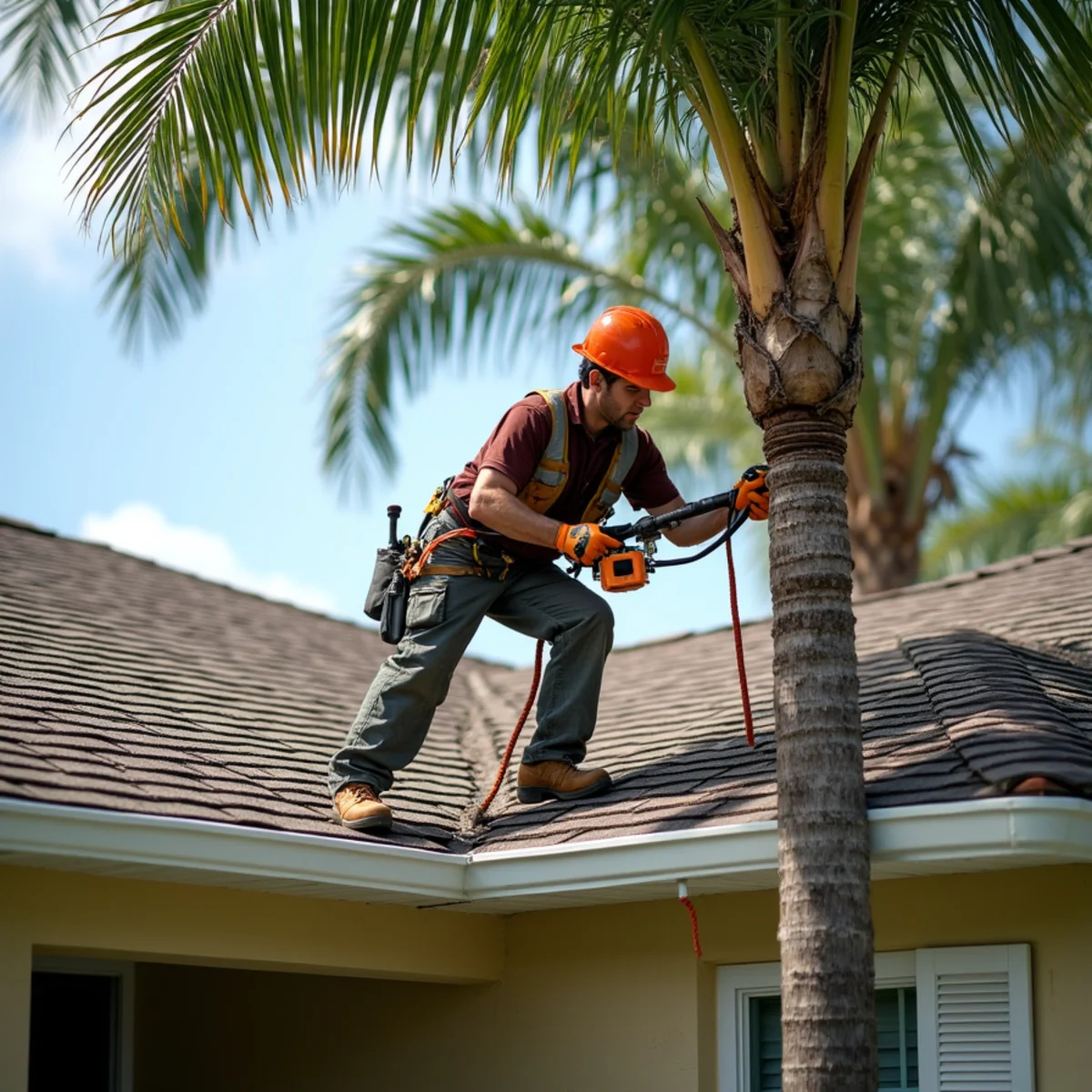
In South Brevard County, mature live oaks, slash pines, and royal poinciana trees create lush shade but pose severe structural threats during hurricane wind events. In tropical force winds, tree limbs whip violently against roof shingles, scouring off protective mineral granules and puncturing sheathing.
The Threat of Live Oak Deadwood and Pine Cones in Gale Winds
Dead tree limbs (known as 'widow-makers') readily snap under 60+ mph wind gusts. A dead 4-inch oak branch dropping 20 feet possesses enough kinetic energy to pierce straight through 1/2-inch plywood decking and shatter roof trusses, creating an immediate catastrophic water breach.
Certified Arborist Standards for South Brevard Residential Parcels
Hire an ISA-certified arborist to prune back all branches to maintain a minimum 10-foot clearance envelope around all roof slopes, eaves, and chimney structures. Pruning should focus on thinning the internal tree canopy ('crown thinning') to allow hurricane winds to pass through harmlessly.
3. Gutter Flow Dynamics: Preventing Destructive Eave Saturation
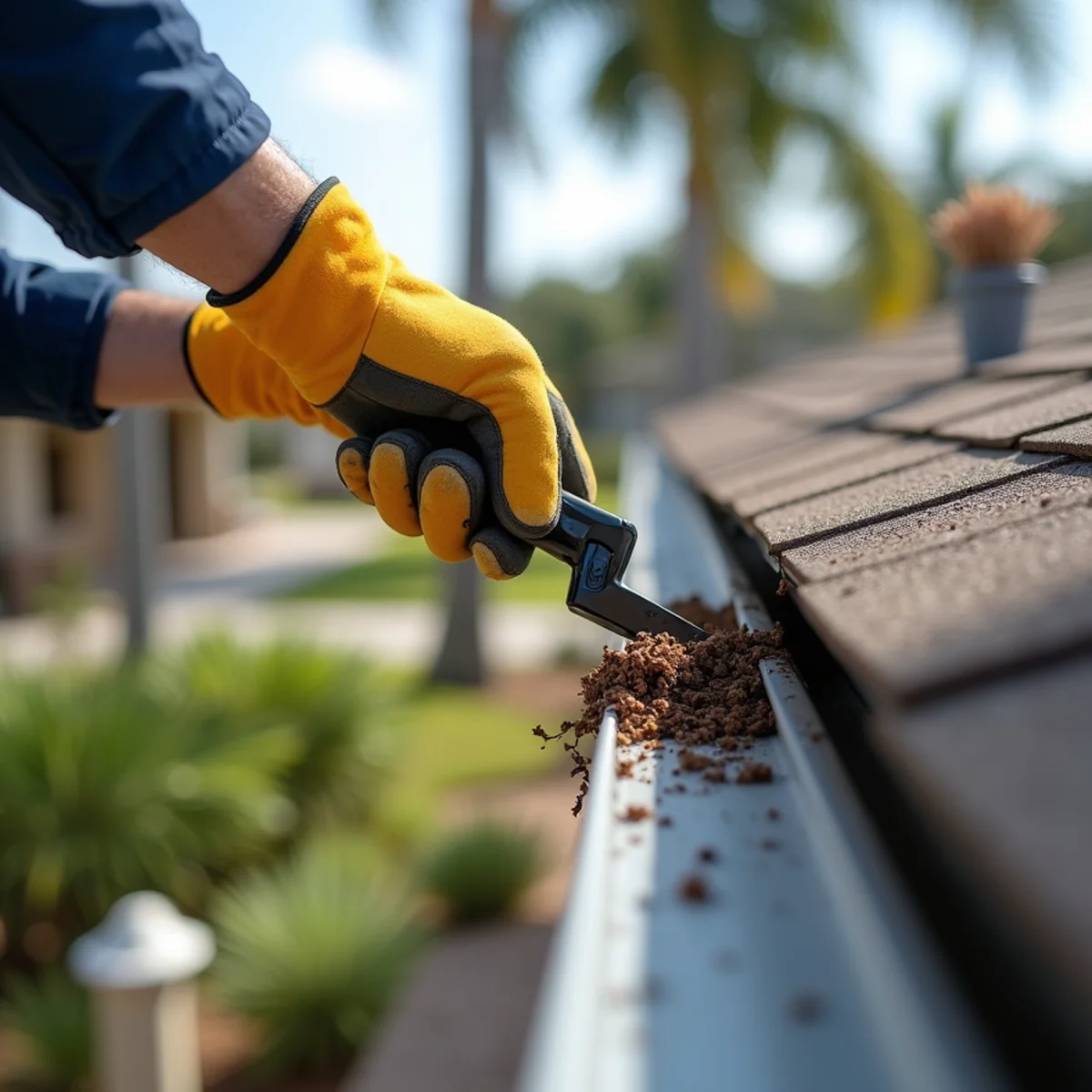
Throughout spring, Brevard County oaks shed heavy pollen tassels, while pine trees drop needles and heavy cones. When this organic matter accumulates in aluminum gutters, it forms dense, water-trapping compost dams.
During a torrential tropical storm delivering 4 to 8 inches of rain in a few hours, clogged gutters instantly overflow. However, instead of simply spilling over the front lip, stormwater backs up behind the gutter, wicking upward beneath the metal drip edge.
Clearing Pine Needles, Granules, and Tassel Debris
Scoop out all decaying matter from gutter troughs and flush downspout elbows with a garden hose to verify unobstructed gravity discharge. If gutters are filled with heavy mounds of shingle granules, your roof is shedding its protective armor and nearing the end of its serviceable life.
Securing Downspout Straps and Installing 5-Foot Water Diverters
Inspect downspout anchor straps screwed into exterior stucco walls. Tighten loose screws and ensure downspout elbows discharge water at least 5 feet away from your foundation to prevent pool-deck cracking and soil subsidence.
4. The Pre-Storm Photographic Audit: Bulletproofing Insurance Claims

Following a major hurricane, the single most common justification insurance field adjusters use to reduce or deny roof claims is asserting that missing shingles, cracked tiles, or leaks were caused by 'pre-existing wear, tear, and long-term deferred maintenance.'
Creating an airtight digital photographic baseline in May completely neutralizes this insurance adjuster defense strategy.
Capturing 360-Degree Timestamped Slope and Ceiling Baselines
Take 25 to 40 crisp, timestamped photos of your home. Capture wide exterior shots showing the roof planes from the street, close-ups of eaves and soffits, and interior shots of every ceiling, hallway, and closet drywall surface, proving zero pre-existing water stains exist.
Cloud Archival Strategies for Post-Disaster Adjuster Proof
Immediately upload this photographic log to cloud storage services like Google Drive, Apple iCloud, or Microsoft OneDrive. If storm winds damage your phone or flood your home, your pre-loss visual evidence remains safely preserved off-site.
5. Interior Attic Inspection: Detecting Hidden Structural and Moisture Weaknesses
A complete pre-hurricane roof evaluation requires climbing into your attic with a powerful flashlight. What you see from the underside of the roof deck reveals structural vulnerabilities invisible from outside.
Looking for Daylight Gaps Around Ridge Vents and Gables
Turn off your flashlight and look around the attic perimeter. Any visible pinpricks of daylight around gable end vents, off-ridge vents, or valleys indicate gaps where wind-driven rain will blow directly inside during tropical storms.
Inspecting Truss Plates, Hurricane Straps, and Drywall Staining
Inspect metal hurricane tie-down clips connecting timber trusses to the concrete tie-beam. Verify that galvanized metal straps are free from heavy rust pitting, and inspect the plywood deck for dark discolored water trails or fungal growth from past slow leaks.
6. Hurricane Supply Staging: Emergency Preparedness Before Storm Warnings
When an evacuation order or hurricane warning is issued, retail chaos ensues across South Brevard. Preparing your emergency mitigation kit weeks in advance gives you immediate self-reliance.
Stocking Heavy-Duty 10-Mil Woven Poly Tarps and 1x2 Battens
Purchase two heavy-duty 20x30 foot woven polyethylene tarps (silver or blue 10-mil), two bundles of 1x2-inch wood furring strips, and a box of 2.5-inch weather-resistant deck screws. Store these materials in your garage or utility shed.
Creating an Emergency Roofing Dispatch Contact Card
Save the direct phone number of a licensed, local Brevard County roofing company with 24/7 emergency dispatch capability into your mobile phone contacts. When storms pass, local dispatch boards book up within minutes.
Related Services & Local Areas Mentioned
Have Questions About Your Palm Bay Roof?
Connect with an experienced Florida roofing specialist. Call (773) 207-0769 for 24/7 live dispatch.
Frequently Asked Questions on This Topic
Clear technical answers based on Florida Building Code and Brevard County field data.
While the official season runs from June 1 through November 30, historical meteorological records show that South Brevard County experiences its highest concentration of severe tropical storms and major hurricanes between mid-August and late October.
Not Urgent? Send a Request
Fill out this form for scheduled re-roofing estimates, non-active maintenance checks, or insurance consultations.