How to Use My Safe Florida Home Grants for Brevard County Roof Upgrades

The My Safe Florida Home (MSFH) program provides eligible Brevard County homeowners with up to $10,000 in state matching grants on a $2-to-$1 basis for qualifying roof replacements. Homeowners obtain a free hurricane mitigation inspection, select an approved licensed roofing contractor, install secondary water barriers and 8d deck nailing, and receive direct state reimbursement.
1. What Is the My Safe Florida Home Program (MSFH)?
Enacted and repeatedly expanded with bipartisan support by the Florida Legislature, the My Safe Florida Home (MSFH) program is a multi-million-dollar state initiative designed to fortify residential homes against hurricane windstorms while lowering skyrocketing property insurance rates.
The program offers two monumental benefits to eligible Florida homeowners: a 100% free, comprehensive hurricane wind mitigation home inspection conducted by state-certified inspectors, and matching grant awards of up to $10,000 to execute authorized structural roofing and opening protection retrofits.
The $2-to-$1 State Matching Grant Formula (Up to $10,000)
For standard applicants, the state matches homeowner expenditures on a 2-to-1 ratio up to a maximum state contribution of $10,000. For example, if a complete code-compliant roof replacement on a Palm Bay home costs $15,000, the state provides $10,000, requiring the homeowner to contribute only $5,000 out of pocket.
Low-Income and Senior 100% Grant Exemptions
Under program guidelines, qualified low-income homeowners (earning at or below 80% of the median family income for Brevard County) and low-income seniors aged 60 and older receive 100% non-matching grants up to $10,000 with zero personal matching requirement.
2. Statutory Eligibility Requirements for Brevard County Homeowners
Because grant funding tranches are eagerly anticipated and frequently oversubscribed within weeks of portal opening, homeowners must ensure they satisfy all state statutory requirements before submitting an application.
Homestead Exemption and Primary Residence Criteria
The applicant must own and reside in the property as their primary domicile, with an active Florida Homestead Exemption on record with the Brevard County Property Appraiser. Second homes, short-term vacation rentals, and investor-owned properties are strictly ineligible.
Wind-Borne Debris Region Verification for South Brevard
The dwelling must be situated within the state's designated Wind-Borne Debris Region. Every square foot of Brevard County—including Palm Bay, Melbourne, West Melbourne, Barefoot Bay, Sebastian, and Satellite Beach—fully qualifies under Florida Building Code wind-borne debris maps.
Insured Value Caps and Mortgage Compliance
The home must have an insured building value (Coverage A limit on your homeowners insurance declaration page) of $700,000 or less, ensuring grant funds prioritize middle-class and working families.
3. Qualifying Roof Improvements and Mitigation Deliverables
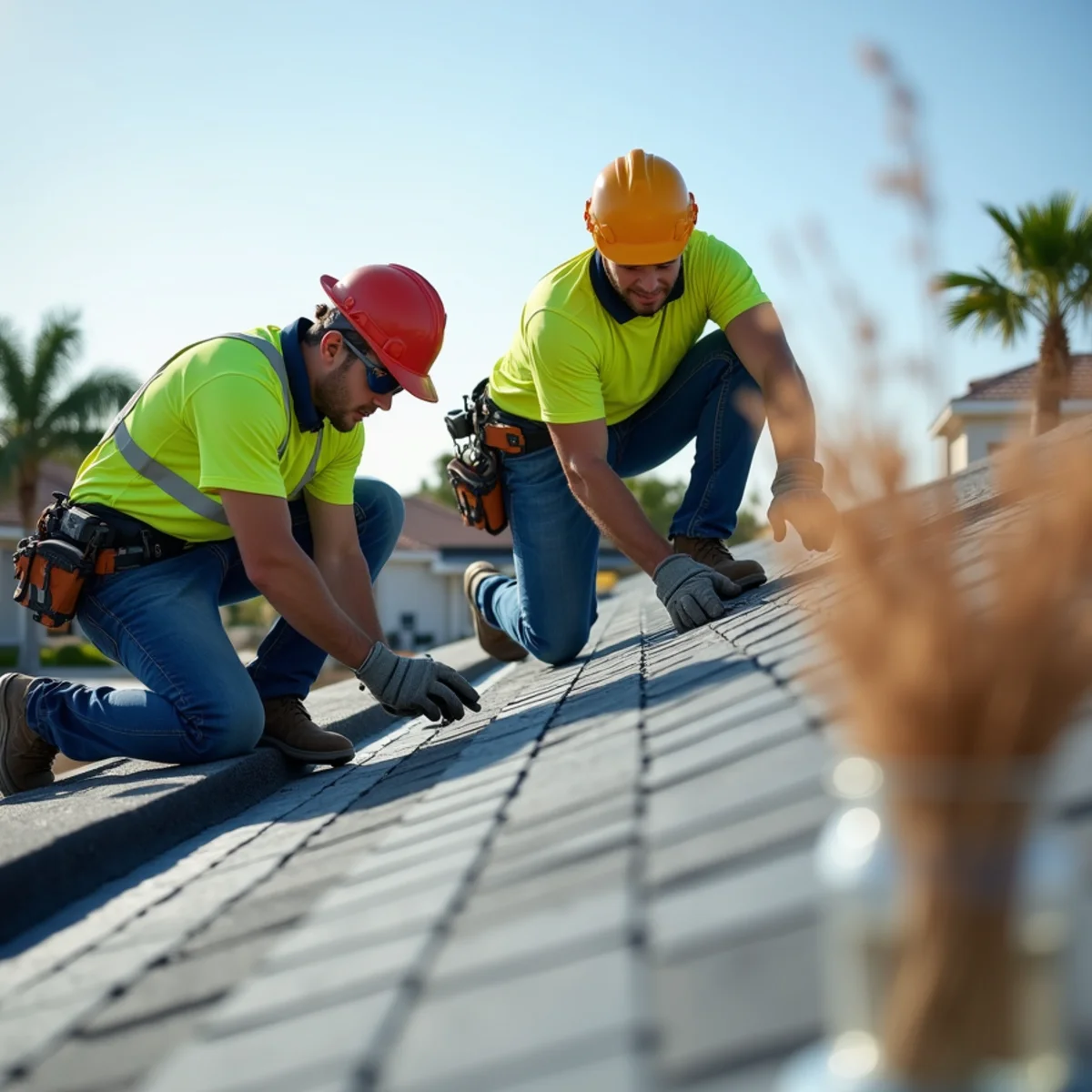
MSFH grant funds cannot be spent on cosmetic upgrades; funds are restricted to specific structural improvements proven to prevent wind damage.
Roof-to-Deck Attachment: 8d Ring-Shank Nails on 6-Inch Centers
The program requires re-fastening all existing roof sheathing using 8d ring-shank nails (2.5 inches long) spaced at 6-inch intervals along all rafter chords, eliminating smooth-shank blow-off failures.
Secondary Water Resistance (SWR): Continuous Peel-and-Stick Decks
Contractors must install a self-adhering polymer-modified bitumen secondary water barrier over 100% of the plywood deck seams before applying the final roof covering.
Impact-Rated Architectural Shingle and Standing Seam Metal Coverings
Eligible roof coverings must hold active Florida Product Approvals demonstrating compliance with high-wind standards, such as ASTM D3161 Class F shingles or 26-gauge standing seam metal.
4. The Four-Stage Application and Approval Lifecycle
Navigating the My Safe Florida Home program requires following an exact administrative sequence to guarantee grant payout.
Step 1: State Portal Registration and Free Wind Audit
Create an account on the state's official web portal (mysafeflhome.info) and request a free initial hurricane mitigation inspection. A state-contracted inspector visits your home, climbs into your attic, and compiles a comprehensive wind risk report identifying qualifying retrofits.
Step 2: Securing Estimates from MSFH-Registered Licensed Contractors
Once your initial report is approved, you obtain itemized written estimates from Florida-licensed roofing contractors who are registered vendors inside the MSFH state portal. Never sign a contract until the state officially issues your Grant Approval Letter.
Step 3: Executing Construction with City of Palm Bay Building Permits
Your chosen contractor pulls municipal building permits, performs the re-roof with mandatory deck re-nailing and peel-and-stick underlayment, and passes city final inspections.
Step 4: Post-Mitigation Inspection and State Grant Disbursement
A state-assigned inspector conducts a free final audit to verify all grant specifications were fulfilled. Upon submitting final invoices and proof of payment, the Florida Department of Financial Services issues direct reimbursement.
5. Pairing State Grants with Lifelong Insurance Premium Discounts
The true financial magic of the My Safe Florida Home program lies in the compounding synergy between the initial capital grant and permanent property insurance reductions.
How Grant-Funded Roofs Earn Top-Tier Form OIR-B1-1802 Credits
Because the grant requires 8d ring-shank nails and secondary water barriers, your completed project automatically qualifies for maximum discounts on the Florida Wind Mitigation Inspection Form OIR-B1-1802.
Combined Financial ROI: $10,000 Grant Plus $1,200 Annual Policy Savings
A homeowner receiving a $10,000 state grant who also captures $1,200 in annual insurance premium savings recovers their entire out-of-pocket contribution within 3 to 4 years, enjoying net-positive financial returns for the remaining 20+ year life of the roof.
6. Common Pitfalls That Disqualify Florida Grant Applicants
Every grant cycle, hundreds of well-meaning homeowners inadvertently disqualify themselves due to procedural errors. Avoid these critical mistakes:
Starting Construction Prior to Official State Grant Approval
The most fatal mistake is signing a contract or having a contractor tear off shingles before the state formally approves your grant application. Work started prior to state approval is completely ineligible for retroactive reimbursement.
Using Unregistered Handymen or Non-Compliant Material Invoices
All work must be completed by a licensed Florida Certified Roofing Contractor (CCC) registered in the portal. Handyman patch jobs or generic store receipts cannot be reimbursed under state statutory rules.
Related Services & Local Areas Mentioned
Have Questions About Your Palm Bay Roof?
Connect with an experienced Florida roofing specialist. Call (773) 207-0769 for 24/7 live dispatch.
Frequently Asked Questions on This Topic
Clear technical answers based on Florida Building Code and Brevard County field data.
Historically, the program has been restricted to site-built single-family homes and townhomes, excluding manufactured and mobile homes. Check current state guidelines for recent legislative updates.
Not Urgent? Send a Request
Fill out this form for scheduled re-roofing estimates, non-active maintenance checks, or insurance consultations.