
Roof Storm Damage and Insurance in Florida: Deadlines, Deductibles and What a Roofer Cannot Do
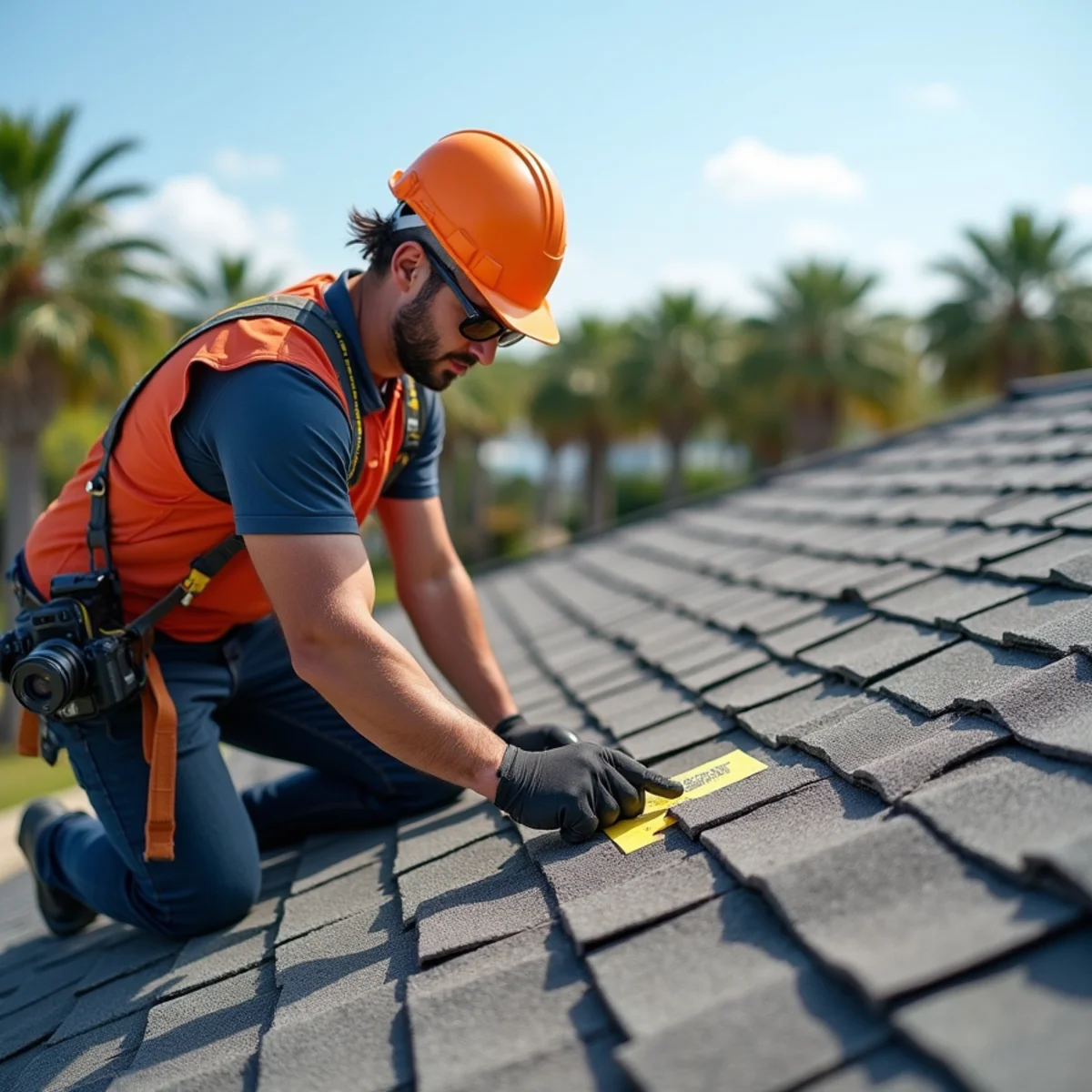
To file a storm damage roof insurance claim in Florida, notify your carrier within one year of storm landfall under F.S. s. 627.70132, verify damages exceed your percentage hurricane deductible, document evidence with date-stamped photos, and hire an independent licensed roofer for forensic scopes before the company adjuster inspects.
1. Strict Filing Deadlines Under Florida Statute s. 627.70132
In recent legislative sessions, the Florida Legislature enacted comprehensive property insurance litigation reforms designed to curb rampant attorney-fee abuse, stabilize carrier insolvency waves, and establish strict, predictable timelines for policyholder claims.
The most pivotal procedural change for Brevard County homeowners involves the statutory claim reporting clock. Under Florida Statute s. 627.70132, a policyholder must give formal notice of a property insurance claim resulting from a windstorm or hurricane to the insurer within one year after the date the hurricane made landfall or the windstorm caused the verified damage. Waiting too long to inspect your roof after a named storm forfeits your legal right to insurance indemnity.
The One-Year Notice Window for Windstorm and Hurricane Losses
Previously, Florida policyholders had up to three years to file storm claims. Under current law, that window is compressed to 365 days. If a hurricane strikes South Brevard in September, notice must be received by your carrier on or before September of the following year, regardless of when interior water stains first manifested.
The 18-Month Supplemental Claim Deadline
For claims that were timely reported but require supplemental billing—such as discovering extensive hidden rotted decking or deteriorated rafter tails during tear-off—homeowners must submit all reopened or supplemental claim documentation within 18 months of the original storm event date.
2. Understanding Your Hurricane Deductible: Flat Dollar vs. Percentage Thresholds
Many Florida homeowners mistakenly assume their standard $1,000 all-perils deductible applies to storm damage. However, when property damage is caused by a storm declared as a hurricane by the National Hurricane Center, a separate Hurricane Deductible is triggered.
Hurricane deductibles are established as a percentage of your property's Coverage A (Dwelling) policy limit, typically 2%, 5%, or 10%. In coastal and near-coastal markets like Palm Bay, Melbourne, and Satellite Beach, this percentage structure creates significant out-of-pocket exposure.
Calculating 2% and 5% Coverage A Deductibles in Brevard County
Consider a typical single-family home insured with a Coverage A dwelling limit of $400,000. With a standard 2% hurricane deductible, your out-of-pocket deductible is $8,000. If the hurricane tears off $6,000 worth of shingles and flashing, the claim falls completely below your deductible, and your insurer will pay zero dollars. Filing a claim in this situation simply creates a claims record without providing any payout.
The Annual Calendar-Year Hurricane Deductible Rule
Under Florida law, hurricane deductibles apply on a calendar-year basis rather than per-storm. If your home is hit by Hurricane A in August and you satisfy your $8,000 deductible, and Hurricane B strikes in October of the same calendar year, your deductible for Hurricane B drops to your standard all-other-perils deductible (typically $500 or $1,000).
3. What Florida Law Strictly Prohibits Roofers from Doing (F.S. s. 489.147)
Florida Statute s. 489.147 was enacted to eliminate predatory contractor practices that plagued Florida neighborhoods following major storms. Understanding what a roofer legally cannot do protects homeowners from fraudulent schemes and potential criminal liability.
The Third-Degree Felony Ban on Deductible Waivers and Rebates
A roofing contractor may not pay, rebate, waive, or promise to absorb any portion of a homeowner's insurance deductible. Any contractor flyer or door-to-door pitch promising a 'free roof' or offering to 'cover your deductible via sign allowances' is explicitly illegal under Florida law, constituting a third-degree felony for the contractor and potentially implicating the homeowner in insurance fraud.
The Legal Distinction Between a Roofer and a Licensed Public Adjuster
Unless licensed by the Florida Department of Financial Services (DFS) as an active Public Adjuster, a roofing contractor cannot legally negotiate policy terms, discuss coverage interpretations with your adjuster, or represent you in settlement conferences. Legitimate roofers provide detailed forensic damage reports, photographic evidence, and itemized material scopes, leaving policy negotiations to the homeowner or licensed adjusters.
Prohibition of Unsolicited Door-to-Door Insurance Canvassing
The statute prohibits contractors from offering monetary gifts, gift cards, or compensation in exchange for allowing them to inspect your roof or file a claim on your behalf. Contractors must rely on reputation, established local licensing, and homeowner-initiated service requests.
4. The End of Assignment of Benefits (AOB) in Florida
In December 2022, the Florida Legislature passed Senate Bill 2-A, effectively ending Assignment of Benefits (AOB) for residential property insurance policies. This marked a monumental shift in how storm repairs are funded across the state.
Why Senate Bill 2-A Eliminated Post-Loss Assignment of Benefits
Under the former AOB framework, dishonest contractors had homeowners sign over their entire insurance policy rights, enabling contractors to bill insurers inflated sums and file lawsuits without homeowner knowledge. Eliminating AOB restored direct communication between the homeowner, carrier, and licensed contractor.
How Homeowners Maintain Control of Claim Funds and Direct Payouts
Claim settlement checks are now issued directly to the named insureds and their mortgage lienholders. This ensures that you maintain full financial control over the funds, inspecting the work and signing off on completion milestones before releasing payments to the roofing contractor.
5. The Step-by-Step Legitimate Claim Filing Protocol
Navigating a legitimate insurance claim requires discipline and methodical documentation. Follow this professional protocol to maximize your likelihood of a fair, timely settlement:
Step 1: Immediate Damage Containment and Tarping Receipts
Your policy contains a strict duty to mitigate damages. Immediately arrange for professional emergency batten tarping to seal active breaches. Retain all contractor invoices, as emergency tarping expenses are reimbursed under standard reasonable mitigation coverage provisions.
Step 2: Securing an Independent DBPR-Licensed Inspection and Photo Log
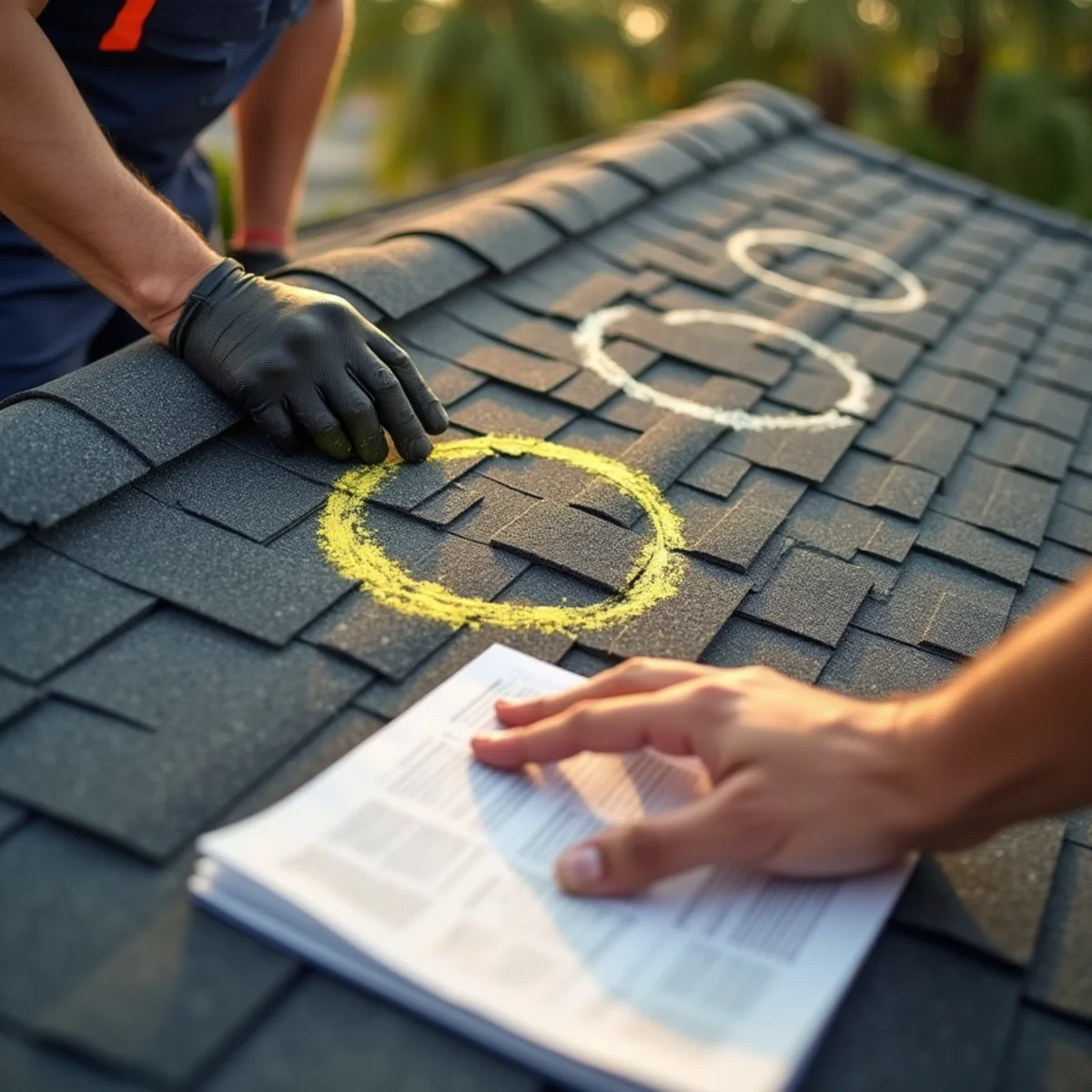
Before calling your carrier's claims hotline, have a local, DBPR-licensed roofing contractor inspect the roof slopes. Obtain high-resolution photos documenting wind creases, fractured shingle tabs, dented soft metals, and hail spatter on lead pipe jacks.
Step 3: Attending the Adjuster Walk-Through with Your Roofing Specialist
When the insurance carrier's field adjuster arrives to inspect the property, your roofing contractor should be present on-site. The contractor can point out subtle wind-lifted tabs, damaged ridge vents, and brittle shingles that an adjuster might overlook during a hurried inspection.
6. Managed Repair Programs vs. Selecting Your Own Licensed Contractor
Some insurance companies in Florida encourage or mandate policyholders to use their 'Managed Repair Program' (MRP), assigning an affiliated contractor from their network. While this can streamline approvals, homeowners must weigh important considerations.
Pros and Cons of Insurer Preferred Contractor Networks
In-network contractors work directly with the insurer's estimating software, which can reduce paperwork friction. However, their primary client is the insurance company, creating potential incentives to install entry-level builder-grade materials rather than high-performance architectural systems.
Protecting Your Right to Quality Florida Product Approvals and Warranties
You retain the legal right to hire any qualified, DBPR-certified roofing contractor you choose. Hiring an established local contractor based in South Brevard guarantees that your installation uses top-rated peel-and-stick secondary water barriers, heavy-gauge coastal drip edges, and manufacturer-backed labor warranties.
Related Services & Local Areas Mentioned
Have Questions About Your Palm Bay Roof?
Connect with an experienced Florida roofing specialist. Call (773) 207-0769 for 24/7 live dispatch.
Frequently Asked Questions on This Topic
Clear technical answers based on Florida Building Code and Brevard County field data.
Florida law prohibits insurers from cancelling or non-renewing a policy solely because of an 'Act of God' storm claim, provided your home is repaired to code following the claim settlement.
Not Urgent? Send a Request
Fill out this form for scheduled re-roofing estimates, non-active maintenance checks, or insurance consultations.