
Tile Roof Leaks & Maintenance in Bayside Lakes and Palm Bay HOA Communities
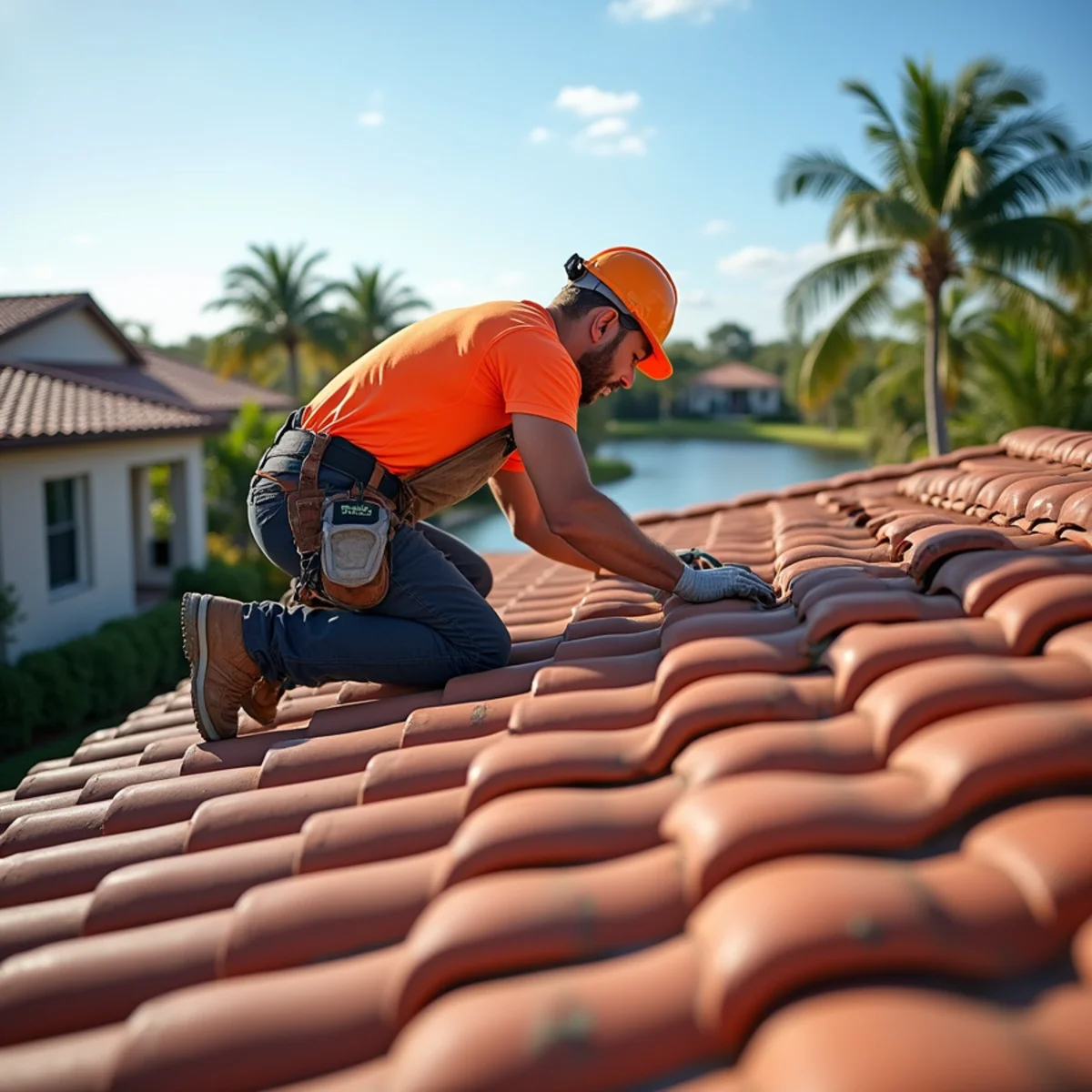
To repair a tile roof leak in Bayside Lakes and Palm Bay HOA communities, you must identify whether the failure stems from broken surface tiles or decayed 20-year-old underlayment beneath. While concrete tiles last 50+ years, organic felt underlayment breaks down from attic heat, requiring precision tile lift-and-relay restoration, foam adhesive resets, and HOA-compliant color matching.
1. The Anatomy of Tile Roof Leaks: Why Surface Tiles Are Not the True Waterproof Barrier
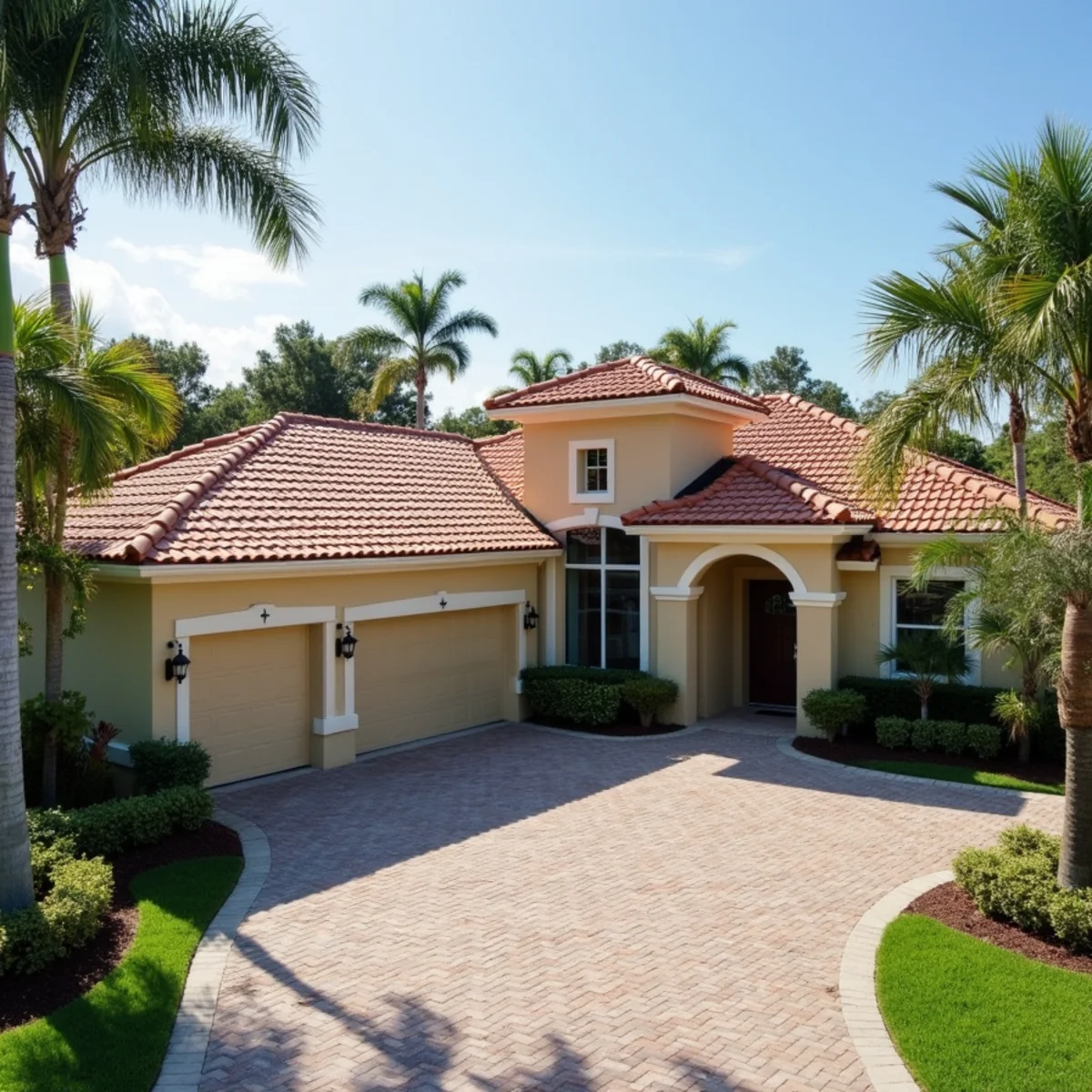
The most pervasive and costly misunderstanding among homeowners throughout Bayside Lakes, The Majors, Country Club Estates, and surrounding southwest Palm Bay subdivisions is the belief that concrete or clay tiles form an impenetrable, watertight shell.
In modern residential roofing architecture, concrete tiles function as a water-shedding exterior shield and aesthetic sun armor. The genuine primary waterproofing system is the underlying membrane attached directly to your plywood sheathing.
Because concrete and clay tiles are installed with mechanical laps rather than glued seams, wind-driven torrential rains from tropical depressions inevitably penetrate beneath the tiles. Once water slips past the tile profile, it relies completely on the underlayment to channel gravity-driven runoff safely into the perimeter gutters.
The Water-Shedding Role of Concrete Barrel and Flat S-Tiles
Heavy concrete barrel and Spanish S-tiles excel at deflecting solar ultraviolet radiation, absorbing hail impacts, and resisting 150 mph Florida wind uplift forces. However, their physical geometry leaves open channels along the pan and headlap where wind-driven moisture migrates during tropical squalls.
The True Waterproofing Membrane: Underlayment Degradation Under Florida Heat
Beneath the tiles, organic #30 asphalt-saturated felt or early-generation fiberglass membranes endure extreme thermal cycling. In South Brevard's climate, attic radiation and tile heat transfer create under-tile temperatures topping 160°F. Over 15 to 22 years, this thermal baking evaporates volatile petroleum oils, leaving the underlayment brittle, friable, and unable to flex during seasonal thermal expansion.
2. The Bayside Lakes HOA Factor: Architectural Covenants and Color Matching
Operating inside deed-restricted master-planned communities like Bayside Lakes requires specialized administrative and aesthetic coordination. The Architectural Review Board (ARB) enforces rigorous exterior guidelines to preserve community property values.
Deed Restrictions and HOA Architectural Review Board (ARB) Rules
Most residential parcels in Bayside Lakes strictly prohibit converting a tile roof to asphalt architectural shingles. Even subtle changes in tile coloration, barrel profile (high-profile Spanish S versus low-profile villa versus flat shake), or ridge mortar color require formal ARB submittal and certified sample boards prior to commencing work.
Sourcing Discontinued Monier, Hanson, and Eagle Roof Tiles
Many homes in Southwest Palm Bay built during the construction booms between 1998 and 2007 utilized tile profiles from manufacturers that have since merged or discontinued specific mold runs, including Monier, Pioneer, and older Hanson lines. An experienced roofing contractor maintains salvage boneyard relationships across Central Florida to source exact vintage matches for spot repairs, avoiding mismatched patchworks that trigger HOA violation notices.
3. Common Failure Modes in South Palm Bay Tile Roofs
Diagnosing a tile roof leak requires forensic precision. Water entering an upstairs bedroom ceiling drywall often originates 15 to 25 feet upslope, traveling horizontally along a wood batten strip or roof truss before finding a fastener penetration.
Cracked Tiles from Foot Traffic, Pressure Washing, and Tree Debris
Concrete tiles are structurally robust under uniform pressure but brittle under concentrated point loads. Inexperienced pressure-washing crews cleaning roof algae or solar installers walking on the weak centers of tiles frequently crack tile lugs. When heavy live oak or pine branches impact the roof during summer squalls, hairline fractures allow water seepage directly onto the sensitive underlayment.
Valley Debris Accumulation and Hidden Metal Flashing Corrosion
Closed tile valleys are designed to channel hundreds of gallons of rainwater per hour. Over several seasons, falling leaves and Spanish moss wash beneath the tile edges, creating dense mulch dams. This organic blockage forces pooling water sideways, flowing past the 4-inch metal valley flanges and soaking unsealed plywood joints.
Eave Closure (Bird Stop) Deterioration and Wind-Driven Rain Ingress
At the perimeter eaves, metal or plastic bird stops prevent birds, rodents, and bats from nesting under the hollow barrels while maintaining critical drainage weep holes. When eave closures corrode or plug with organic silt, rainwater dams up along the starter course, rotting the fascia board and sub-fascia plywood.
Mortar Joint Separation and Two-Component Foam Adhesive Failure
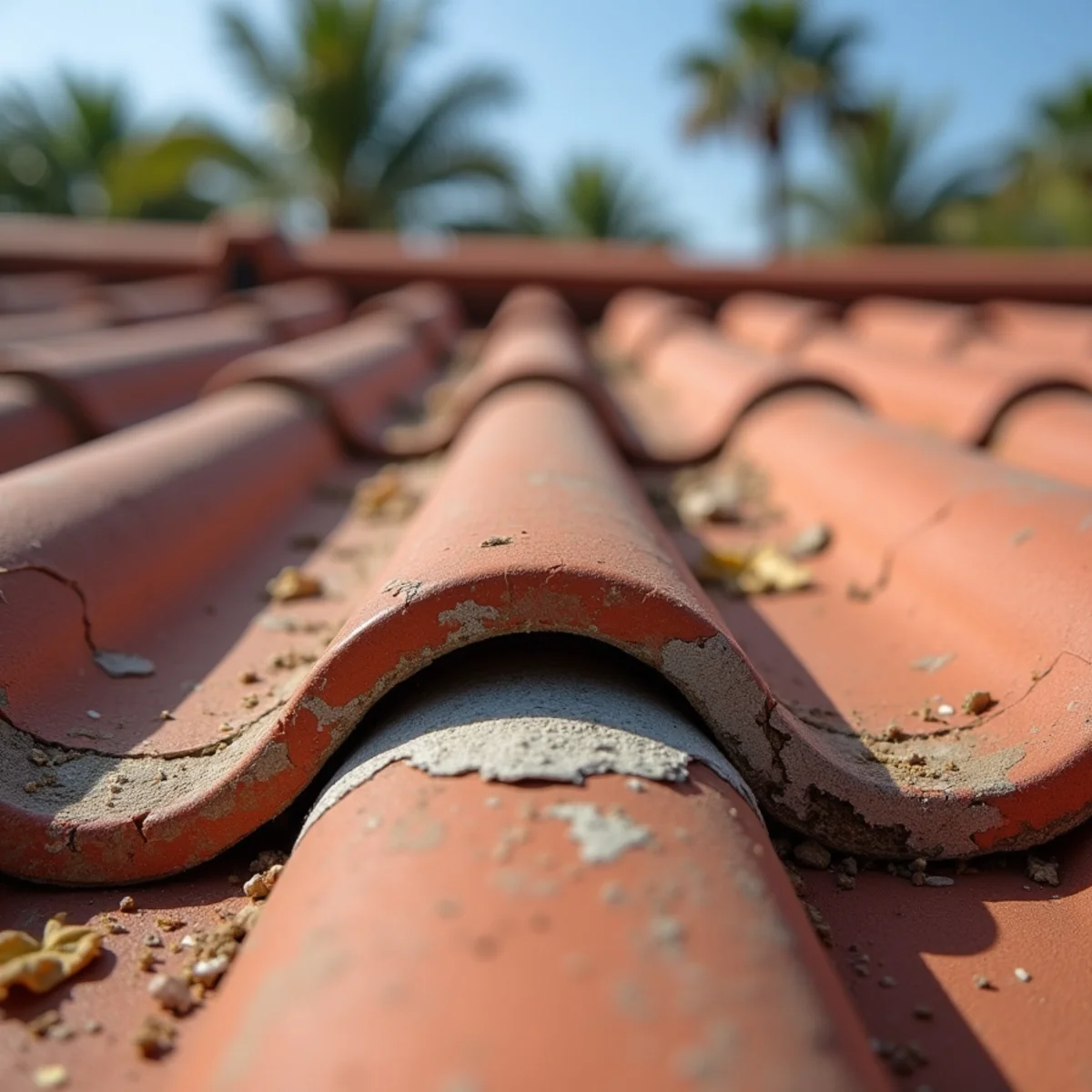
Along ridge caps and hips, traditional mortar beds degrade over 15 to 20 years, cracking from structural settling and wind vibration. In newer installations secured with two-component polyurethane adhesive foam packs (such as ICP Polyset or Touch 'n Seal), UV degradation or improper foam bead placement during original construction can cause individual ridge caps to loosen.
4. The 'Tile Lift and Relay' Solution vs. Full Replacement
When an underlayment reaches the end of its 20-year lifespan across multiple roof slopes, homeowners often fear they must spend $40,000 to $65,000 on a complete roof replacement. However, because the concrete tiles themselves remain structurally sound for 50 or more years, a specialized 'Tile Lift and Relay' (underlayment restoration) provides a cost-effective, code-compliant alternative.
Step 1: Careful Tile Staging, Salvage, and Numbering
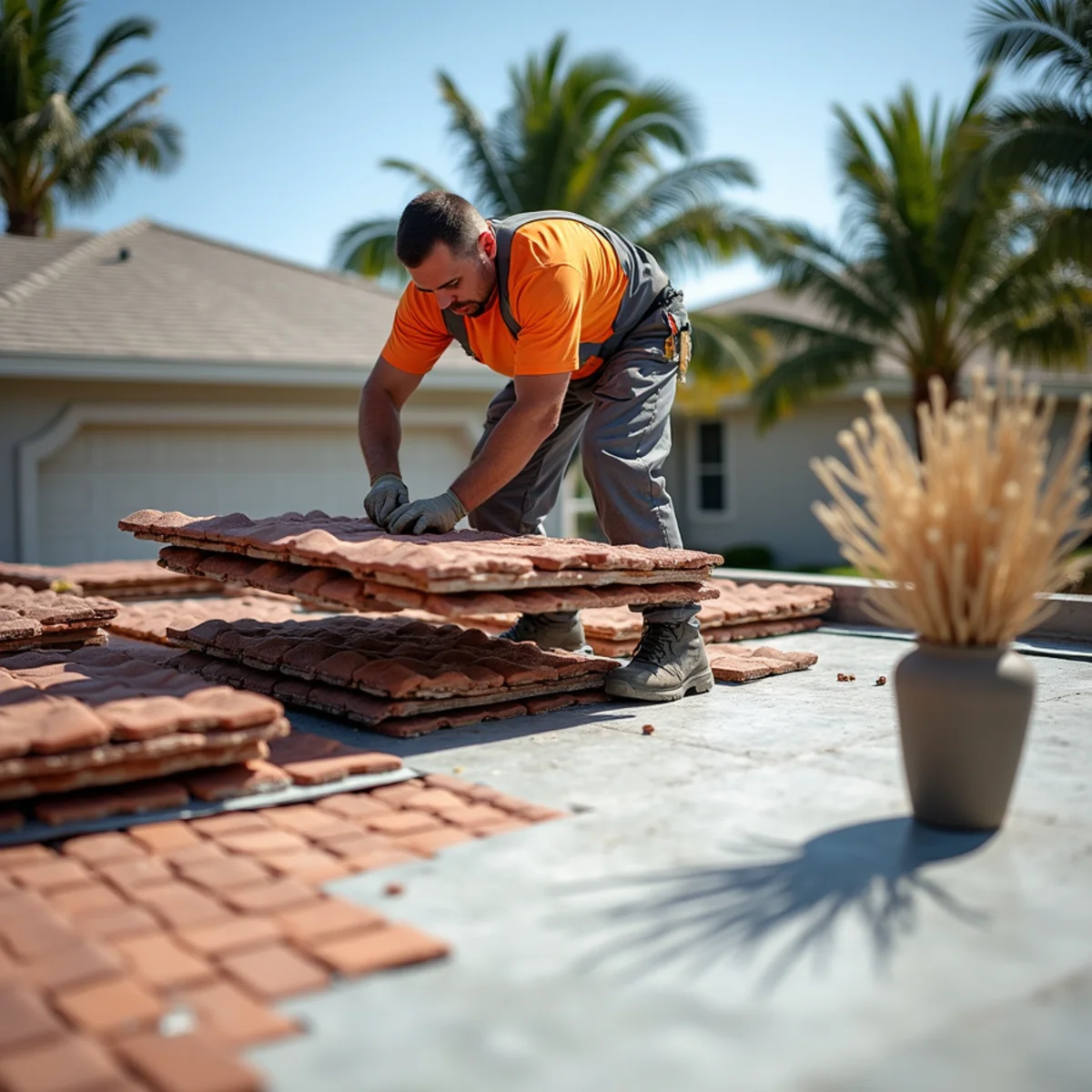
Crews systematically detach the existing concrete tiles, sorting them by profile and palette. Field tiles and ridge caps are carefully stacked on roof trusses using engineered weight-distribution boards to prevent structural truss overload. Typically, 85% to 95% of existing tiles are fully salvaged.
Step 2: Substrate Deck Inspection, Code Re-Nailing (8d Ring-Shank), and Repair
The deteriorated organic felt is stripped down to bare plywood sheathing. Technicians inspect every sheet for dry rot, termite damage, and delamination. The entire deck is then re-nailed to the 2023 Florida Building Code standard using 8d ring-shank nails spaced 6 inches on center along panel edges and 6 inches in the field, qualifying the home for maximum insurance wind mitigation credits.
Step 3: Dual-Ply Modified Bitumen or High-Temp Peel-and-Stick Underlayment
We install a premium, high-temperature self-adhering modified bitumen underlayment (rated to withstand 250°F+ without thermal slippage) directly to the wood decking. This forms an impermeable secondary water resistance (SWR) barrier that seals tightly around every subsequent mechanical fastener.
Step 4: Reinstallation with Wind-Rated Foam Adhesive and Mechanical Anchors
The salvaged tiles are re-laid course by course. Every field tile is secured using Florida Product Approved two-component polyurethane tile adhesive foam or corrosion-resistant stainless-steel screws, engineered to withstand Category 5 hurricane wind uplift forces up to 160 mph.
5. Cost Analysis: Tile Roof Repair vs. Lift-and-Relay in Palm Bay (2026 Price Matrix)
Understanding the financial scope of tile roof maintenance enables Bayside Lakes homeowners to make sound investment decisions. Below are realistic price benchmarks based on local South Brevard labor and material costs.
Itemized Tile Repair and Restoration Cost Benchmarks
• Isolated Tile Crack & Flashing Repair: $450 to $1,200 (Replaces broken barrel tiles, reseals lead pipe boots, resets displaced ridge mortar).
• Valley Rebuild & Waterproofing (per 15-ft valley): $1,400 to $2,600 (Lifts tiles, cleans silt dam, replaces 26-gauge Galvalume valley metal, installs self-adhering SWR membrane).
• Comprehensive Tile Lift-and-Relay: $6.50 to $9.50 per square foot (Saves 40% to 50% compared to buying brand-new tile materials while providing a brand-new 25-year waterproofing system).
• Full Concrete Tile Roof Replacement: $14.00 to $21.00 per square foot (Full tear-off and installation of new Eagle or Boral concrete barrel or flat tile system).
Comparing the 20-Year ROI: Lift-and-Relay vs. Brand-New Tile Installation
On an average 2,800 square foot Bayside Lakes residence, a full new tile roof can easily reach $45,000 to $58,000. Executing a professional tile lift-and-relay achieves the exact same 25-year waterproof integrity for $22,000 to $29,000—saving homeowners over $20,000 while satisfying all HOA architectural covenants and securing complete insurance policy renewals.
6. Florida Building Code (FBC) Compliance and Brevard County Permitting
Any roofing work beyond minor cosmetic patch repairs requires strict adherence to Florida statutory codes and City of Palm Bay Building Department inspections.
The 25% Roof Repair Rule in Florida Building Code Existing Building Section 706
Under Chapter 7 of the Florida Building Code (Existing Building), if more than 25% of a total roof system or roof section is repaired or restored within any 12-month period, the entire roofing section must be brought into compliance with current code requirements. Lift-and-relay restorations fall under official municipal permitting, requiring rough-in deck nailing inspections and final wind-uplift sign-offs.
Wind Uplift Engineering for 150 MPH South Brevard Design Speeds
South Brevard County is categorized within the 140 to 150 mph ultimate design wind speed contour. All tile repairs and adhesive foam patterns must conform strictly to FRSA/TRI (Florida Roofing & Sheet Metal Contractors Association / Tile Roofing Industry Alliance) 7th Edition installation manuals to ensure legal windstorm certification.
Related Services & Local Areas Mentioned
Have Questions About Your Palm Bay Roof?
Connect with an experienced Florida roofing specialist. Call (773) 207-0769 for 24/7 live dispatch.
Frequently Asked Questions on This Topic
Clear technical answers based on Florida Building Code and Brevard County field data.
Never walk directly on the unsupported middle sections of concrete or clay tiles. Improper foot weight will crack brittle tiles instantly. Certified roofers step only on the reinforced lower thirds of overlapping tiles directly above structural battens using specialized load-distributing foam pads.
Not Urgent? Send a Request
Fill out this form for scheduled re-roofing estimates, non-active maintenance checks, or insurance consultations.